Heavy Rain in Nepal: Trekking and Travel Safety Update 2026
Nepal is experiencing an active period of heavy rainfall as a weather system over the Bay of Bengal strengthens. For travelers planning a Himalayan adventure, heavy rain in Nepal is an important factor to consider before starting a trek or long-distance journey. Current forecasts indicate increased rainfall activity from September 24 through September 28, with particularly heavy to extremely heavy rain possible in some areas.
For trekkers, the issue is not simply whether it will rain. Persistent rainfall can increase the possibility of landslides, flooding, debris flows, road blockages, flight disruption and rapidly changing mountain conditions. Nepal authorities and weather experts have therefore urged travelers to monitor official updates and reconsider journeys into vulnerable mountain and hill areas while conditions remain unsettled.
What Is Happening With the Weather in Nepal?
Heavy Rain Forecast for September 24–28
Nepal's Department of Hydrology and Meteorology is monitoring a deep depression over the Bay of Bengal that is moving west-northwestward. The system is expected to influence rainfall across Nepal, with forecasts indicating heavy to very heavy rainfall in several provinces. Some weather models have also indicated the possibility of exceptionally high rainfall totals in certain locations, although the exact amount and location can change as the system develops.
The current situation means visitors should avoid relying on an older forecast made several days before departure. Weather conditions in Nepal's hills and mountains can change quickly, so checking the latest official forecast before leaving Kathmandu or another trekking gateway is an essential part of responsible trip planning.
Which Parts of Nepal Are Most at Risk?
Gandaki and Lumbini
Gandaki and Lumbini are among the areas receiving particular attention during this weather event. Forecasts indicate the possibility of heavy to extremely heavy rainfall, thunderstorms, lightning and strong winds in parts of these provinces.
This matters for travelers because Gandaki includes major tourism destinations and trekking gateways such as Pokhara, while Lumbini connects with important road and travel routes. Heavy rainfall can affect both local transportation and access to surrounding hill and mountain areas.
Koshi, Bagmati and Other Provinces
The weather system is not limited to western Nepal. Heavy rainfall has also been forecast in parts of Koshi, Bagmati, Madhesh, Karnali and Sudurpashchim, while moderate rain and thunderstorms are expected across wider areas.
The Weather Forecasting Division reported heavy rainfall in parts of Koshi, Bagmati and Gandaki on September 24, with very heavy rainfall possible in some hilly locations.
Why Is Nepal Experiencing Heavy Rain?
The current rainfall is associated with a low-pressure system that developed over the North Andaman Sea and moved into the Bay of Bengal. The system has strengthened into a deep depression and is influencing moisture and atmospheric conditions across the region.
Nepal is particularly sensitive to such weather because of its geography. A journey that appears straightforward on a map can cross steep hillsides, river valleys and mountain roads where prolonged rainfall can quickly change ground and road conditions.
What Are the Main Travel Risks?
Floods and Landslides
The primary concerns during this weather event are flooding, landslides, debris flows, inundation and road obstruction. These hazards can develop quickly, particularly around rivers, steep slopes and roads cut into hillsides. Authorities have increased disaster preparedness and instructed agencies to monitor conditions closely.
Recent travel restrictions demonstrate why conditions should be taken seriously. Authorities have already introduced overnight restrictions on sections of major highways because of landslide and flood risks. The Narayanghat–Muglin road, for example, was scheduled for an overnight closure on September 24–25.
What Does the Weather Mean for Trekkers?
Should You Postpone a Trek?
For travelers preparing for trekking in Nepal during this period, flexibility is important. Nepal's weather authorities have advised people planning trekking or travel in mountainous areas to postpone or reconsider journeys until weather conditions improve.
That does not mean every trekking destination is experiencing identical conditions. Weather varies significantly by altitude, region and local geography. Instead, trekkers should assess their specific route, current weather forecast, trail conditions, road access and guidance from local authorities and experienced trekking operators before departure.
For anyone already in the mountains, the priority should be following local safety instructions rather than attempting to maintain a fixed itinerary at all costs.
Road and Air Travel Disruptions
Heavy rainfall can affect Nepal's transportation network in several ways. Landslides may temporarily block highways, while flooding can affect bridges and low-lying roads. Mountain flights can also be delayed or cancelled when visibility, wind or airport conditions become unsuitable.
Nepal authorities have specifically warned about potential disruption to road and air transportation during the current weather system.
Travelers should therefore leave additional time between connecting journeys and avoid scheduling critical international connections immediately after a mountain-road transfer whenever possible.
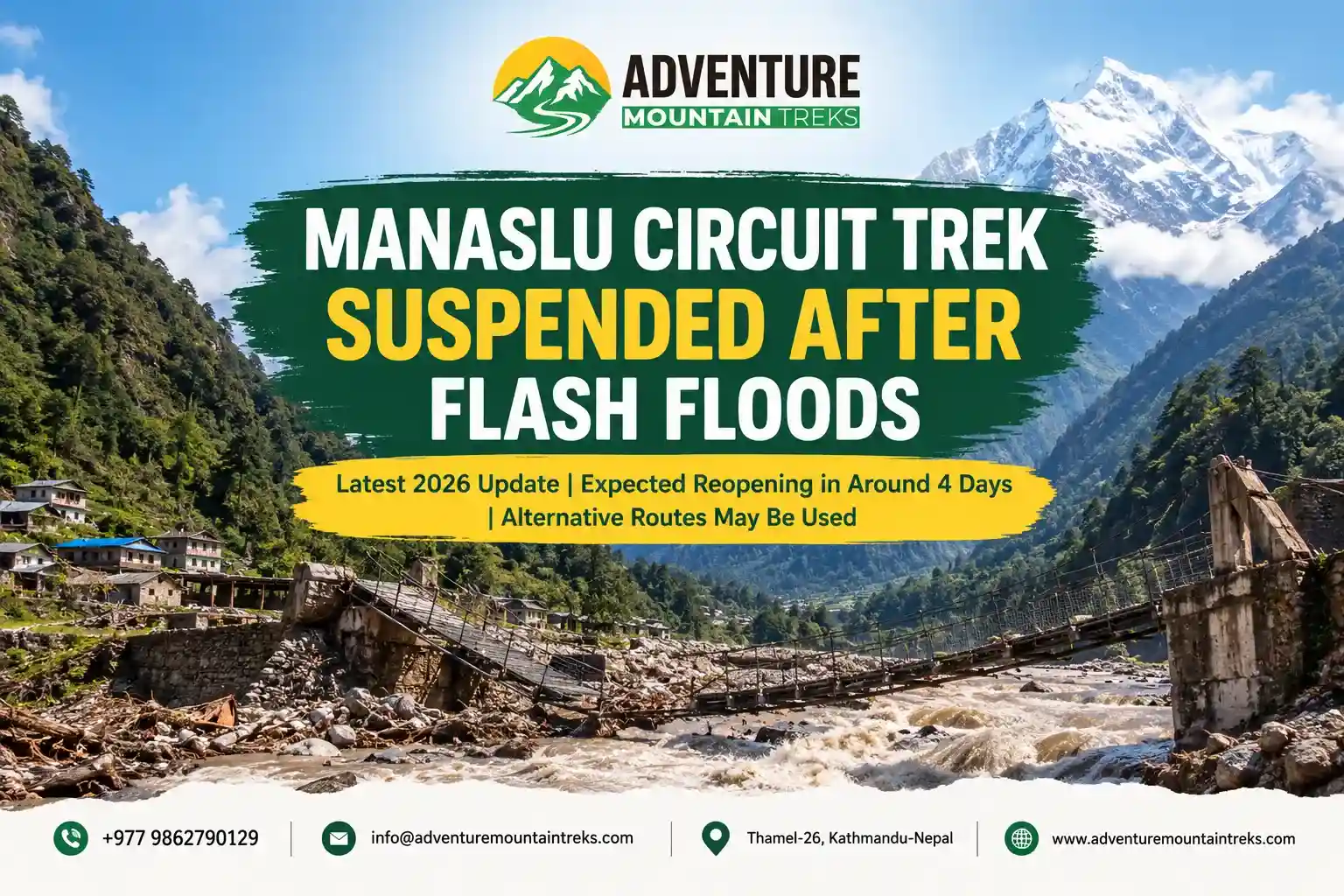
If you are considering the Manaslu region for a later date, you can explore our Manaslu Circuit Trek and review its itinerary, route details, altitude profile, and current departure information.
How Adventure Mountain Treks Is Responding
Adventure Mountain Treks takes changing Himalayan conditions into account when planning trekking and expedition itineraries in Nepal. During periods of significant weather risk, trek planning should be based on current forecasts, route conditions, local information and the safety of travelers rather than simply following a pre-set schedule.
The team can help travelers understand how changing conditions may affect a planned Himalayan journey and whether itinerary adjustments should be considered. Travelers can also learn more about the company's approach and Nepal adventure experience through its About Adventure Mountain Treks page.
Nepal Trekking Safety: What Travelers Should Do
If you are currently planning a Nepal trek during this period of heavy rainfall, keep your itinerary flexible and monitor updates immediately before departure. Check official weather information, ask about current road and trail conditions, and maintain communication with your trekking company or local guide.
A practical checklist includes:
- Check the latest Department of Hydrology and Meteorology forecast before travelling.
- Avoid unnecessary night travel during periods of heavy rain.
- Follow instructions from local administrations and security authorities.
- Avoid riverbanks, unstable slopes and areas with known landslide risks.
- Allow extra time for road journeys and possible flight delays.
- Do not continue a trek simply because accommodation or transport has already been booked.
- Keep emergency contacts and communication options available.
The goal is simple: enjoy the Himalayas when conditions allow, rather than taking unnecessary risks to protect an itinerary.
For more practical information about trekking conditions, preparation, destinations, and travel updates, explore the our blogs.
Frequently Asked Questions
Is Nepal safe for trekking during heavy rain?
Safety depends on the specific destination and current conditions. During the September 2026 heavy-rain period, authorities have warned of floods, landslides, debris flows and transportation disruption and have advised people to reconsider trekking and mountain travel until conditions improve.
Should I postpone my Nepal trek?
If your trek falls within an active heavy-rain warning, postponing or adjusting the itinerary should be considered. The decision should be based on the latest official forecast, route-specific conditions and advice from local authorities and your trekking operator.
Which trekking areas are affected?
Conditions vary by region. Gandaki, Lumbini, Koshi and Bagmati are among the areas highlighted in current forecasts, while other parts of Nepal can also experience rain and thunderstorms. Always check conditions for your exact trekking route rather than relying on a nationwide assumption.
Can flights and roads be delayed?
Yes. Heavy rain can reduce visibility, affect mountain flights and trigger landslides or flooding that temporarily disrupt roads. Travelers should allow extra time and check the latest transport conditions before departure.
Where should travelers check weather updates?
Travelers should prioritize updates from Nepal's Department of Hydrology and Meteorology, local administrations and their trekking operator. Current conditions can change quickly, making recent forecasts more useful than older travel information.
Conclusion
The current heavy rain in Nepal is a reminder that Himalayan travel requires flexibility. Forecasts for September 24–28 indicate significant rainfall across multiple parts of the country, with risks including floods, landslides, debris flows and transportation disruption.
For trekkers and international visitors, the safest approach is to monitor official updates, avoid unnecessary travel during severe weather and remain prepared to adjust an itinerary. Nepal's mountains will still be here when conditions improve, and a flexible travel plan gives you a much better opportunity to experience them safely.
Adventure Mountain Treks continues to help travelers plan Himalayan adventures with attention to changing local conditions, route information and responsible trekking practices.