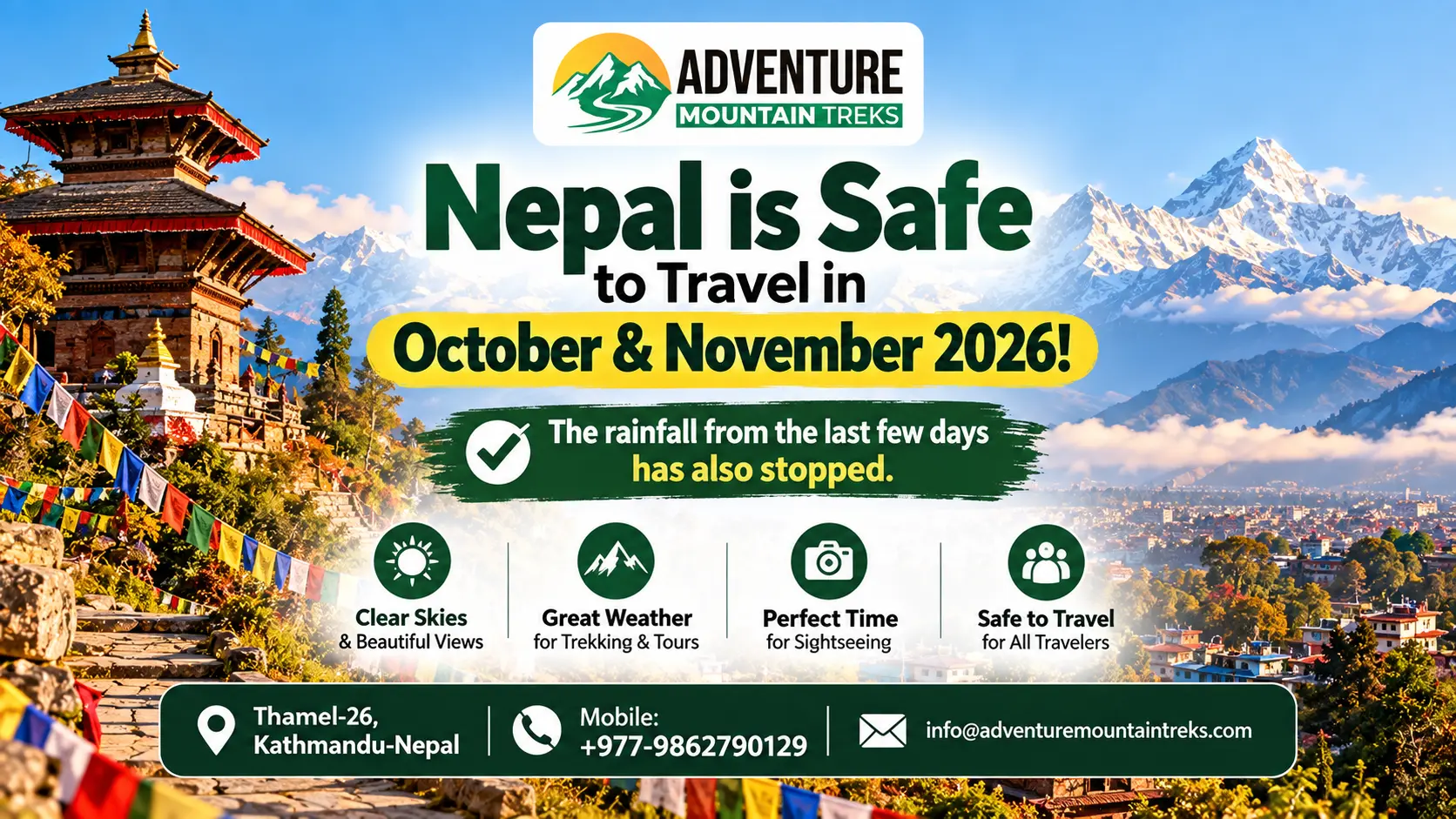
Is Nepal Safe to Travel in October and November 2026?
Yes, Nepal is welcoming travelers in October and November 2026, and the country is entering one of its most popular travel and trekking periods of the year. The recent days of heavy rain have already begun to ease, with skies clearing in Kathmandu and tourist activities resuming in Pokhara after four days of continuous rain. At the same time, travelers should understand that conditions can still vary from one region to another, especially in mountain and road-access areas that experienced recent flooding or landslides.
For people planning an October or November trip to Nepal, the timing is especially attractive because the country is moving from the wet monsoon period into autumn. Nepal Tourism Board says that the clearest skies generally come after the monsoon in October and November, while its travel guidance identifies September to November as one of the favorable periods for trekking.
That means travelers thinking about Everest Base Camp, Annapurna Base Camp, Manaslu Circuit, Langtang Valley, cultural tours, Pokhara or Kathmandu have a strong seasonal reason to start planning now. The important point is not to treat “Nepal is safe” as meaning every road and every trail has identical conditions. A better way to think about it is that Nepal is open for travel and the overall weather outlook is improving, while specific routes should still be checked before departure.
Is Nepal Safe to Travel in October and November?
For mainstream tourism, October and November are generally among the most attractive months to visit Nepal. The monsoon season brings the majority of Nepal's annual rainfall from June through September, and the country then moves into autumn, when conditions generally become drier and skies clearer. Nepal Tourism Board specifically notes that there is no seasonal restriction on traveling through Nepal and identifies autumn as one of the best periods for visiting and trekking.
The current September 28 situation also points toward improvement. Nepal's Meteorological Department reported on September 28 that weather conditions varied by location, with several destinations showing relatively low rain probabilities, while separate reports said that Kathmandu's skies had started clearing after four consecutive days of rain. In Pokhara, tourist activities resumed as the weather improved, and mountain ranges including Annapurna, Machhapuchhre and Dhaulagiri became visible again.
That is good news for travelers who were waiting for the weather to settle. Still, Nepal is a geographically diverse country, and high mountain areas cannot be judged only by conditions in Kathmandu or Pokhara. Travelers should think in terms of destination-specific safety: where you are going, how you are getting there, what altitude you will reach and whether recent weather has affected the route.
Nepal Weather Is Improving After the Recent Rain
The recent weather change is one of the most important reasons travelers are again looking toward Nepal for the coming autumn season. On September 27, reports from Kathmandu said sunshine had returned after four consecutive days of rain, with a Department of Hydrology and Meteorology forecaster explaining that a weakening low-pressure area was reducing rainfall activity in Nepal. The following day, September 28, tourist activity in Pokhara had resumed as the weather cleared.
The current official weather information also shows relatively comfortable conditions in several places. On September 28, the Nepal Meteorological Department listed Pokhara with a maximum temperature range of 29–31°C and a 30% rain indication, while Nepalgunj and Ghorahi showed no rain in the displayed forecast. Conditions naturally vary across the country, but this provides a useful snapshot of a country beginning to move away from the prolonged wet-season pattern.
For travelers, the most noticeable benefit of improving weather is visibility. Anyone who has visited Nepal during persistent monsoon cloud knows how dramatically weather can hide the mountains. Once the skies start opening, the experience can change within hours: long mountain ridges appear, blue skies return, roads become more pleasant to travel and outdoor activities become easier to enjoy.
That is exactly why late September through November is such an interesting period for Nepal. The landscape is still fresh and green from the rains, while the country gradually settles into the clearer autumn pattern.
Why October Is a Popular Month to Visit Nepal
October sits at the heart of Nepal's autumn travel season. According to Nepal Tourism Board, October and November generally have the clearest skies after the monsoon, and September to November is considered one of the best periods for trekking. This seasonal advantage is a major reason Nepal becomes so popular with trekkers and mountain travelers during these months.
For an international visitor, October offers a combination that is difficult to replicate at another time of year. You can spend a few days exploring Kathmandu's heritage sites, travel to Pokhara for mountain scenery and lakeside experiences, and then head into the Himalayas for a multi-day trek. The weather is typically much more favorable for outdoor activities than during the peak monsoon months.
October can also feel especially lively because major festivals arrive around this period. Nepal Tourism Board's current festival information lists Dashain 2026 in Nepal from October 7 to October 15 and Tihar from November 3 to November 6 on its festival calendar, while its individual festival pages provide more detail about the celebrations.
This makes October more than a weather choice. It can also be a cultural travel opportunity.
Better Weather and Mountain Views
One of the biggest reasons people choose October is the chance of seeing the Himalayas under clearer skies. Nepal Tourism Board explains that the clearest skies are generally found after the monsoon during October and November. For trekkers and photographers, that difference matters because Himalayan scenery is much more rewarding when peaks are visible across valleys rather than hidden behind persistent cloud.
Recent conditions in Pokhara provide a real-world example. After four days of continuous rain, tourist activities resumed when the skies cleared, and reports noted renewed visibility of Annapurna, Machhapuchhre and Dhaulagiri. That change captures the transition Nepal is now moving through: the rain has not simply vanished everywhere overnight, but the weather pattern is improving and the country is heading into its classic autumn window.
October is also a good month for people who want a mixture of trekking and sightseeing rather than one single activity. Lower-altitude destinations become easier to explore, mountain trails become increasingly attractive and cultural attractions in Kathmandu Valley remain accessible. The result is a very flexible travel season.
Of course, “better weather” should never be confused with a guarantee of perfect weather every day. Nepal's geography creates major differences between valleys, hills and high mountains. A good autumn itinerary still leaves room for changing conditions.
Best Time for Trekking in Nepal
The words Nepal trekking October have become closely associated with autumn adventure for a reason. Nepal Tourism Board recommends September to November as a favorable trekking period because daytime weather is generally fair and temperatures do not drop as rapidly at night as they can during colder periods.
For many trekkers, October offers a particularly satisfying balance. The major monsoon rains have passed, mountain views can improve significantly and daytime walking can be comfortable at lower and mid elevations. Higher-altitude sections remain cold and demanding, of course, but the broad seasonal conditions are much more suitable for long-distance trekking than those found during the peak rainy months.
This is why popular routes such as Everest Base Camp, Annapurna Base Camp, Manaslu Circuit and Langtang Valley attract travelers during this period.
October can therefore be an excellent starting point for anyone who has been waiting for the post-monsoon trekking season.
Why November Is Also a Great Time to Visit Nepal
November continues the autumn season and is also recognized by Nepal Tourism Board as a period with clear post-monsoon skies. As the month progresses, temperatures gradually become cooler, especially at higher elevations, but the mountain scenery can remain excellent. For travelers who prefer crisp conditions and a less wet atmosphere, November can be an appealing time to trek.
November also offers a different atmosphere from early October. The major Dashain period has passed, while Tihar and other cultural events bring the festive character of Nepal to cities and communities. Nepal Tourism Board describes Tihar as a five-day festival of lights and colors, with homes decorated with lamps, candles and garlands.
From a trekking perspective, November is useful for travelers looking for the same broad autumn advantages without necessarily traveling at the beginning of the season. Mountains can be beautifully visible, and many routes remain active. The trade-off is that higher elevations can feel distinctly colder, so clothing and sleeping arrangements become increasingly important as the month advances.
For travelers deciding between October and November, the choice can largely come down to preferred weather, itinerary timing and festival interests. Both are strong autumn months for Nepal travel.
Is It Safe to Trek in Nepal This Autumn?
Trekking in Nepal during October and November can be a suitable choice for prepared travelers, but safety depends on more than the month on the calendar. Altitude, weather, trail conditions, transport, physical preparation and route planning all matter. The recent heavy rain is another reason to obtain current information before starting a trek, particularly on routes where roads, bridges or mountain trails were recently affected.
The key point is that the autumn trekking season itself is approaching under favorable seasonal conditions, but individual routes should still be checked. Nepal Tourism Board's current climate guidance supports autumn trekking, while government travel advisories continue to identify certain disaster-affected areas where additional caution is required.
A local trekking agency can be especially useful because conditions can change between the time you book and the day you leave. A route may be technically open but have a changed road approach, temporary transportation issue or local trail restriction.
Popular Treks for October and November
Everest Base Camp remains one of Nepal's most recognizable trekking experiences. The route takes trekkers into the Khumbu region, where autumn brings the possibility of clearer mountain views and classic Himalayan scenery. Adventure Mountain Treks currently lists a 14-day Everest Base Camp Trek and other Everest-region itineraries.
Annapurna Base Camp is another popular autumn choice, especially for travelers looking for a shorter Himalayan trek. Adventure Mountain Treks lists a 12-day Annapurna Base Camp Trek among its current packages.
Manaslu Circuit provides a more remote and demanding trekking experience. Adventure Mountain Treks' current 2026/2027 guide describes the Manaslu Circuit as a strenuous 13-day trek reaching Larkya La at 5,160 meters, with autumn listed among its best seasons.
Langtang Valley can suit travelers who want a Himalayan trekking experience closer to Kathmandu. Nepal Tourism Board lists October–November and March–May as the best seasons for Langtang National Park.
The right route depends on your available days, altitude experience, fitness, travel style and the latest local conditions.
Check Local Trail Conditions Before Trekking
One of the simplest ways to improve a trekking trip is to ask the right questions before departure. Is the trail currently open? Is the approach road operating normally? Have recent landslides affected the route? Are bridges and accommodation facilities accessible? Are there any local restrictions or temporary changes?
Those questions are especially relevant in 2026 because recent floods and heavy rainfall have affected parts of Nepal. The UK's current Nepal travel advice warns that areas affected by flooding and landslides may remain unstable and that further rainfall can create additional landslides, rockfalls and other hazards, particularly in mountainous areas.
The U.S. State Department currently lists Nepal at Level 2 – Exercise Increased Caution because of natural-disaster risks and specifically says not to travel to the Rasuwagadhi–Timure–Syafrubesi area of Rasuwa because of flood damage, disrupted infrastructure and continuing recovery operations.
That does not mean travelers should treat the whole of Nepal as closed. It means they should identify their exact destination and verify it.
What Travelers Should Know About Recent Rain and Floods
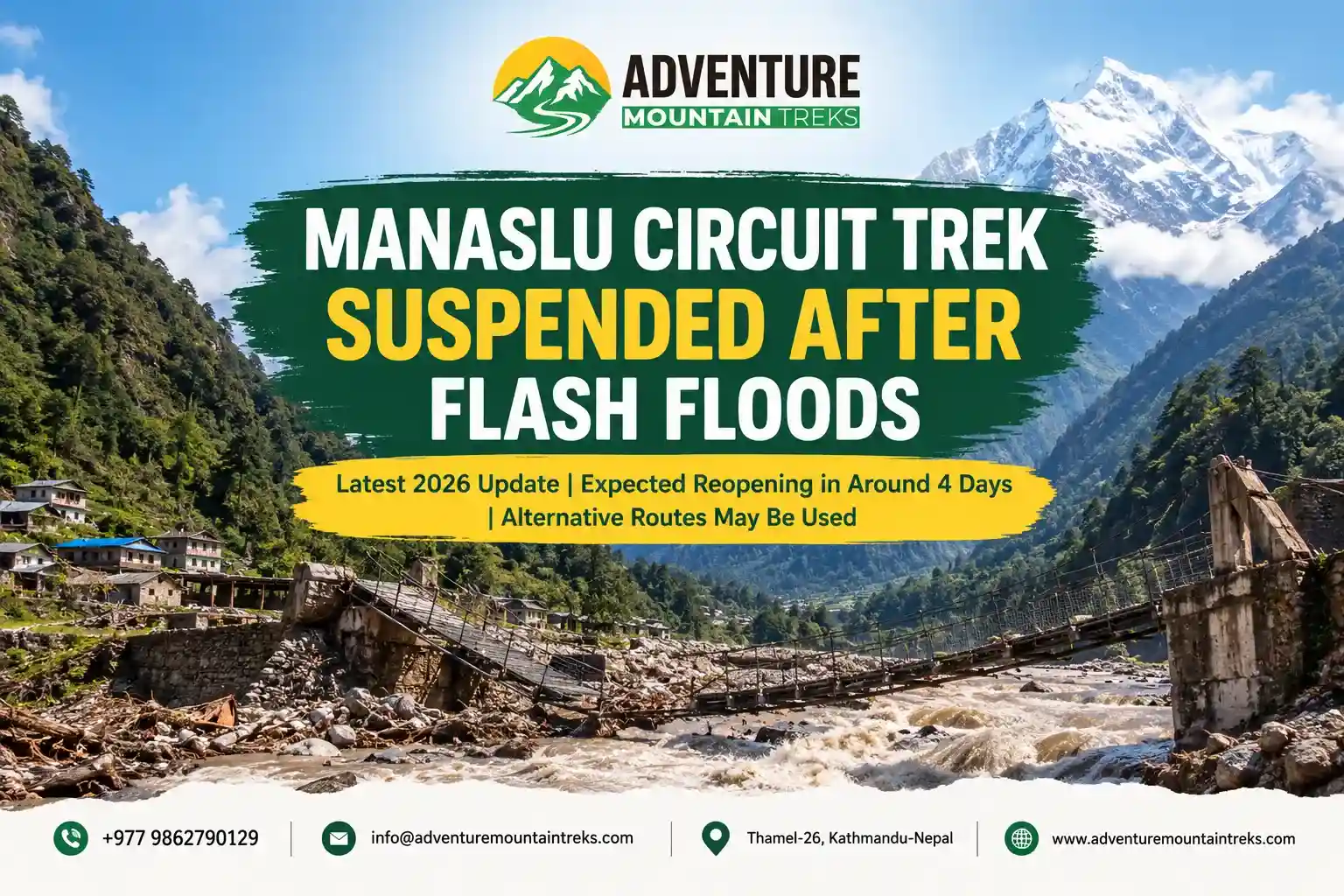
The recent rain is an important part of the 2026 travel conversation, but it should not be used to describe the condition of every region in Nepal. Severe flooding in parts of Rasuwa in August caused substantial damage to roads, buildings, transportation and communications infrastructure, and official travel advice continues to highlight that area. Other districts were also affected by flooding and landslides.
At the same time, reports from September 28 show tourism activity returning in Pokhara after four days of continuous rain, while Kathmandu saw clearing skies after the same broader period of wet weather. That combination illustrates the current situation well: weather is improving, tourism is active, but recovery is still underway in some specific locations.
For a visitor, this is much more useful than a simple “safe” or “unsafe” label. If your trip is focused on Kathmandu, Pokhara, cultural tourism or an unaffected trekking route, the planning picture can be quite different from someone traveling directly into an area with known flood damage.
Some Areas Still Need Extra Caution
Travelers should pay particular attention to official warnings about the areas that have experienced recent natural disasters. The current U.S. advisory identifies the Rasuwagadhi–Timure–Syafrubesi area in Rasuwa as a do-not-travel zone because of flood damage, disrupted transportation and communications, recovery work and the possibility of further flooding and landslides.
The UK's current advice similarly says that roads, transportation and communication infrastructure in flood-affected regions have been badly damaged and warns that unstable ground can remain hazardous after flooding and landslides.
That information is particularly relevant for travelers considering routes that pass through recently affected mountain corridors. A responsible itinerary should avoid restricted areas and rely on current local information rather than an older map or blog post.
There is an important difference between being cautious and being afraid to travel. Caution means checking conditions, allowing extra time, using reliable transport, following local advice and changing a route when necessary. That is normal good practice for mountain travel anywhere in the world.
Roads and Transportation Can Still Change
The road network is one of the areas where recent rain can continue to matter after the sun returns. Landslides and flood damage can make certain roads temporarily inaccessible, partially open or slower than usual. This can affect trekking approaches, bus journeys and connections between Kathmandu and other regions.
For this reason, a traveler should avoid building an autumn itinerary with no flexibility at all. Add some buffer time before major flights or trekking departures, especially if your itinerary depends on a long overland journey. A local operator can also help identify alternative arrangements when conditions change.
The important thing is that good weather and good road conditions are related, but they are not the same thing. The skies may clear while road repairs continue. That is why checking transportation status close to departure remains a useful part of planning.
Nepal's Autumn Festivals Are Coming
One of the biggest attractions of visiting Nepal in October and November is that the improving weather arrives alongside major cultural celebrations. Dashain and Tihar are two of the country's most important festivals, and they give visitors the chance to experience Nepal beyond the trekking trails.
Nepal Tourism Board's festival calendar currently lists Dashain from October 7 to October 15 and Tihar from November 3 to November 6, while individual tourism pages describe the traditions and cultural significance of these festivals.
For travelers, this can make an autumn itinerary particularly memorable. You can see historic Kathmandu, explore Pokhara, trek through mountain villages and then experience the festive atmosphere in Nepalese communities.
One practical consideration is that festivals can change travel patterns. People travel to their home districts, government offices and businesses observe holidays, and transportation can become busier around major celebrations. Checking your bookings and travel arrangements early is therefore sensible.
Dashain 2026 in Nepal
Dashain is Nepal's longest major Hindu festival and is strongly associated with family reunions, blessings, tika, new clothes, feasting and religious celebrations. Nepal Tourism Board describes it as a major harvest festival and notes that many people travel home during this period.
For visitors, Dashain can be an interesting time to see a different side of Nepal. The streets, villages and homes can have a distinctly festive atmosphere, while cultural sites and local communities offer experiences that are very different from the usual trekking itinerary.
At the same time, visitors should remember that Dashain is primarily a family and religious celebration. Respect for local customs is important, particularly when visiting temples, homes or community events.
For a trekking traveler, the festival can become a natural part of the journey rather than something that needs to be treated as a separate attraction.
Tihar and the Festival of Lights
Tihar, often called Nepal's festival of lights, is known for colorful decorations, lamps, flowers and several days of distinctive traditions. Nepal Tourism Board describes the five-day celebration as a festival associated with Yama and the worship of Laxmi, with homes illuminated by candles, oil lamps and electric lights.
For someone visiting Kathmandu during Tihar, the atmosphere can be particularly striking. Decorated homes, lights and cultural rituals create an experience that feels completely different from an ordinary week in the city.
The festival also gives travelers another reason to combine a Himalayan trek with time in Nepal's urban and cultural destinations. A few days in Kathmandu or Pokhara after a trek can offer a chance to experience local celebrations before heading home.
Simple Tips for Traveling to Nepal in October and November
Traveling during autumn does not require complicated preparation, but a few simple habits can make the trip smoother. First, check the weather close to your departure rather than relying only on seasonal averages. Second, verify your exact route and transportation arrangements, especially if your itinerary includes recently rain-affected areas. Third, carry layers because temperatures can change significantly as you gain altitude.
Travel insurance is also a sensible consideration for trekking. Make sure the policy actually covers the activities and altitude involved in your itinerary rather than assuming every standard policy includes high-altitude trekking.
For trekking routes, good footwear, a waterproof layer, warm clothing, sun protection and basic personal medicines are practical essentials. Even during the autumn season, mountain weather can change quickly. Read more about Best time to visit Nepal.
The goal is not to overpack for every possible problem. It is to be prepared for the normal realities of traveling through a mountainous country.
Check Weather and Transport Before Departure
Nepal's Department of Hydrology and Meteorology provides current weather, flood and other meteorological information, including a toll-free 1155 number for weather forecasting and flood early-warning information. Travelers can use official information alongside updates from their trekking operator.
Checking conditions is particularly important between late September and early October because this is the period when the country is transitioning out of the monsoon. The broad seasonal trend may be favorable, but individual days can still bring rain, clouds or localized storms.
For transportation, reconfirm flights, buses, private vehicles and road access close to the day of travel. This is a simple step, but it can save hours of frustration when weather or road conditions change.
The good news is that travelers do not need to choose between “perfect conditions” and “no trip.” Flexibility gives you a third option: travel with a sensible backup plan.
Plan or Book Your Autumn Trek with Adventure Mountain Treks
For travelers planning an October or November trek in Nepal, Adventure Mountain Treks offers routes across the Everest, Annapurna, Manaslu and Langtang regions, along with tours, short hikes and other Himalayan experiences. The company describes itself as a government-licensed trekking company in Nepal with more than 10 years of experience and lists its office in Thamel, Kathmandu.
Its current package listings include Everest Base Camp, Annapurna Base Camp, Manaslu Circuit, Langtang Valley and other trekking itineraries, giving travelers different options depending on the length and difficulty of the trip they want.
For a season like autumn 2026, a local trekking operator can be useful not simply for booking the trek but also for monitoring route conditions. A good agency should be able to discuss the latest transportation situation, trail access, accommodation and practical changes to the itinerary when weather or infrastructure requires them.
Adventure Mountain Treks can be contacted at +977-9862790129 or info@adventuremountaintreks.com, with its listed office at Thamel-26, Kathmandu, Nepal.
Conclusion
Is Nepal safe to travel in October and November 2026? For travelers planning normal tourism and trekking, Nepal is open and entering its popular autumn season, with weather conditions improving after the recent spell of rain. Kathmandu has seen clearing skies, tourist activities have resumed in Pokhara, and Nepal Tourism Board identifies October and November as the period when post-monsoon skies are generally clearest.
The important qualification is that conditions are not identical everywhere. Some areas remain affected by flood and landslide damage, and current international travel advice specifically warns against travel to the Rasuwa border area affected by the August flooding. Travelers should therefore check the exact destination, route and transportation arrangements before departure rather than assuming that a nationwide “all clear” exists.
For those planning a Nepal trip in October or November, the overall seasonal picture is promising: clearer skies, better mountain visibility, popular trekking conditions and major festivals such as Dashain and Tihar. Nepal's autumn season is approaching, the weather is getting better, and the mountains are ready for another trekking season.
Frequently Asked Questions
Is Nepal safe to travel in October 2026?
Nepal is open to travelers in October, and the month is traditionally one of the country's most popular travel periods. Weather usually becomes clearer after the monsoon, but travelers should still check current conditions for their specific destination and avoid any areas subject to official warnings.
Is Nepal safe to travel in November 2026?
November is also a popular month for visiting and trekking in Nepal. Nepal Tourism Board identifies October and November as the period when skies are generally clearest after the monsoon. Temperatures can become colder at higher elevations, so appropriate clothing and preparation remain important.
Is the weather in Nepal getting better in late September 2026?
Yes, conditions are improving in several places. Kathmandu experienced clearing skies after four consecutive days of rain, and tourist activities resumed in Pokhara as the weather improved. The official weather service still shows variation between regions, so travelers should continue checking current forecasts.
Is October a good month for trekking in Nepal?
Yes. Nepal Tourism Board lists September to November among the favorable trekking months, and its climate information says October and November generally bring the clearest skies after the monsoon. Popular autumn routes include Everest Base Camp, Annapurna Base Camp, Manaslu Circuit and Langtang.
Should I be concerned about the recent floods and landslides?
Travelers should be aware of them, but the risks are location-specific rather than uniform across Nepal. Some areas remain affected and official advisories identify specific locations where travel should be avoided. Before trekking or taking a long road journey, check the latest route, weather and transportation information and follow local guidance.