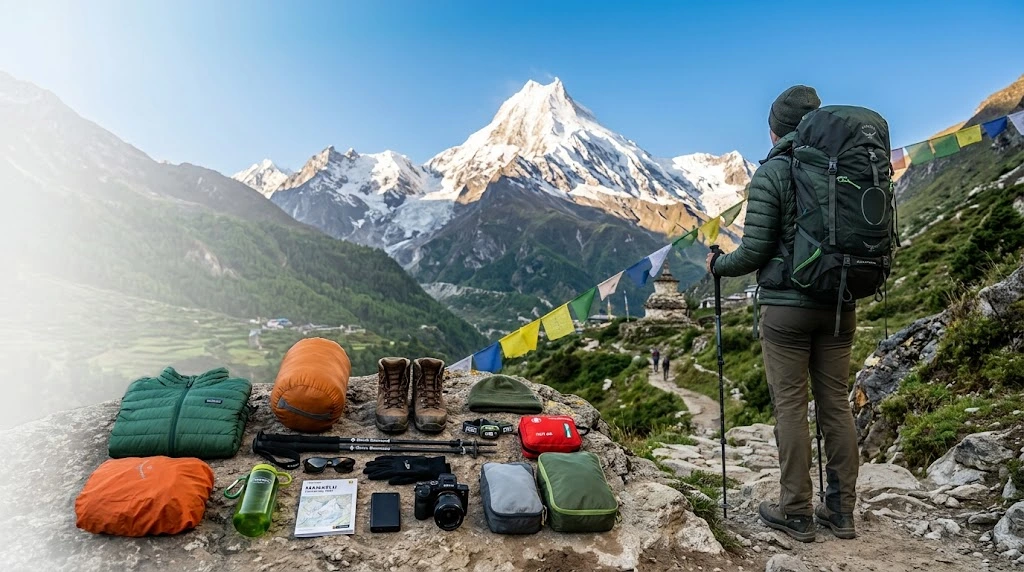
Manaslu Circuit Trek Packing List : The Complete Gear Guide
The Manaslu Circuit Trek circles Mount Manaslu, the world's eighth-highest peak at 8,163 meters. It's one of Nepal's most rewarding restricted-area treks.
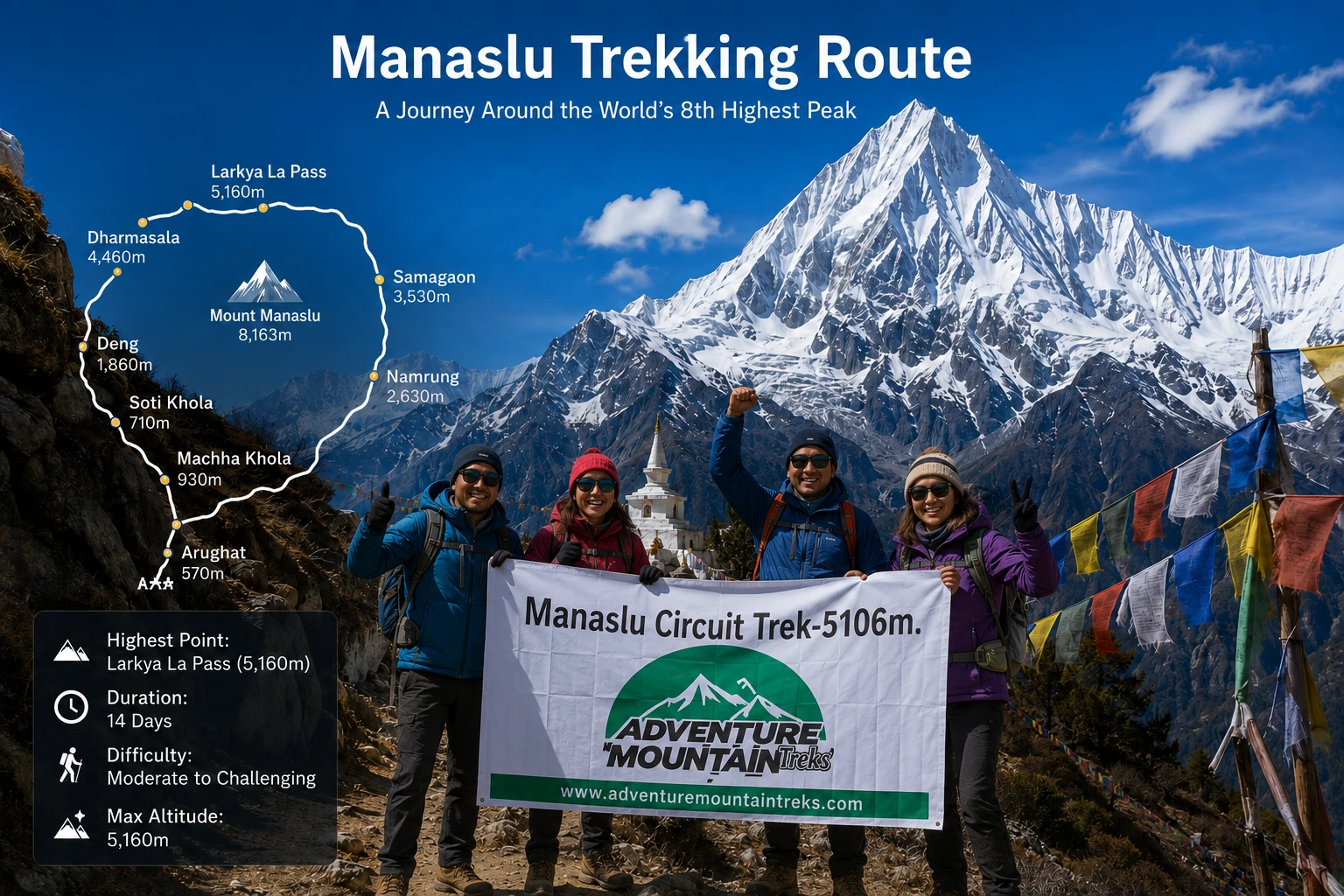
The trail climbs from 800 meters in warm lowlands to the 5,160-meter Larke Pass. Few treks in the Manaslu region cover this much vertical range in one trip.
Most Manaslu circuit itineraries run 13 days, with the pass crossing around day 9-10. This timeline gives your body real time to acclimatize.
We've guided and researched treks along this Manaslu trekking route firsthand. The terrain shifts daily, from river gorges to glacier moraine near Samdo.
It's a restricted area, so based on our previous experience every trekker needs a licensed guide and permits. That means far fewer crowds than Everest or Annapurna.
Gear for a Manaslu trek isn't about packing everything you own. It's about matching a focused list to conditions you'll genuinely face on the trail.
A layering system beats one heavy jacket, since you'll move through heat, forest cold, and glacier-level cold in one week.
Footwear carries outsized importance on this hiking route, alternating between rocky trails and snowfields near the pass. Broken-in boots prevent blisters.
A properly rated sleeping bag isn't optional here; it's part of your safety gear. High-altitude medicine shows that sleep quality often declines above 4,000 meters, making headaches, fatigue, and other AMS symptoms feel worse.
Small self-sufficiency items matter more on this trek to Manaslu than on busier routes. There's no shop to help once you're past the last village.
Every recommendation here is built around what actually happens on the trail. Knowing why each item matters helps you pack smarter.
Choosing the right gear becomes much easier when you understand the trail's demands. Read our Manaslu Circuit Trek Difficulty Guide to learn about the trek's physical challenges, altitude, and preparation tips before packing.
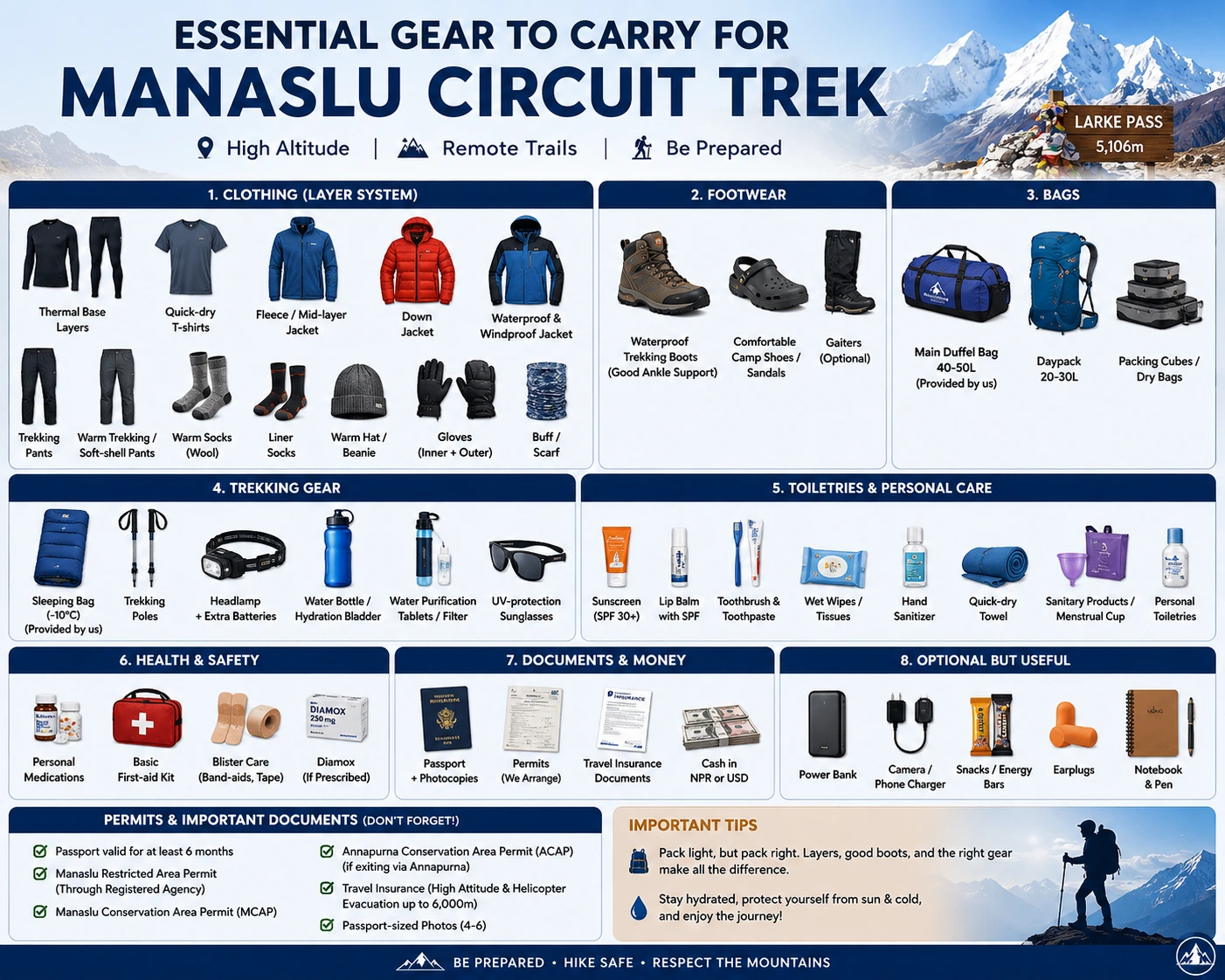
Quick Packing Checklist for Manaslu Trek
| Category | What to Pack |
|---|---|
| Clothing | Thermal base layers, quick-dry T-shirts, fleece/warm mid-layer, down jacket, waterproof & windproof jacket, trekking pants + warm/soft-shell pair, underwear & sports bras, wool socks, liner socks, warm hat, gloves (inner + outer), buff/scarf |
| Footwear | Waterproof trekking boots, camp shoes/sandals, gaiters (optional) |
| Bags | Main duffel bag 40-50L (provided by us), daypack 20-30L, packing cubes or dry bags |
| Trekking Gear | Sleeping bag rated -10°C (provided by us), trekking poles, headlamp with spare batteries, water bottle/hydration bladder, purification tablets or filter, UV-protection sunglasses |
| Toiletries & Personal Care | Sunscreen SPF 30+, SPF lip balm, toothbrush & toothpaste, wet wipes, hand sanitizer, quick-dry towel, sanitary products/menstrual cup |
| Health & Safety | Personal medications, first-aid kit, blister care, Diamox (if prescribed) |
| Documents & Money | Passport (6+ months validity), trekking permits (we arrange these), travel insurance, cash in NPR/USD |
| Optional but Useful | Power bank, phone/camera charger, snacks or energy bars, earplugs, lightweight notebook |
(Full explanations for every item are covered section by section below.)
Why the Manaslu Trekking Route Needs a Different Packing List
Manaslu isn't just another Himalayan trek with a different name — the region itself changes what belongs in your bag.
- It's a restricted area.
You need an agency-arranged permit to enter, and there are no gear shops past the last village. Why it matters: any gear you forget or that fails, you're managing without — there's no backup shop on the trail.
- The altitude swing is extreme.
You begin in subtropical forest at 800m and reach the 5,160m Larke Pass about a week and a half later. Autumn is generally preferred for its stable weather and clear visibility. The Manaslu Circuit Trek Guide on Autumn provides more context on what to expect during the season. Why it matters: a single jacket can't cover both climates — this is the core reason a layering system, not one heavy piece, is the right approach.
- Teahouse infrastructure is thinner.
Charging points, hot showers, and restocked shops are less reliable than on Everest or Annapurna. Why it matters: self-sufficiency items like a power bank and spare batteries carry more weight in your decision-making here than on busier routes.
Important Gear to Carry for the Manaslu Region Trek
Clothing
What you need:
- Thermal base layers (top & bottom)
- Quick-dry T-shirts
- Fleece or warm mid-layer jacket
- Down jacket
- Waterproof & windproof jacket
- Trekking pants
- Warm trekking pants or soft-shell pants
- Underwear & sports bras
- Warm socks (wool recommended)
- Liner socks
- Warm hat/beanie
- Gloves (inner + outer)
- Buff/scarf
Layer from the skin out: start with a moisture-wicking thermal base layer, then add quick-dry trekking T-shirts for comfort without unnecessary weight. A properly insulated down jacket is your most important cold-weather layer, especially for freezing mornings and nights around Samagaun and Dharamsala.
Wool socks paired with liner socks help reduce blisters and stay comfortable over multiple trekking days, while a warm hat, layered gloves, and a buff protect against wind, dust, and cold as you gain elevation.
During one of our recent Manaslu treks, an afternoon downpour caught a few hikers without proper rain gear. Those carrying lightweight waterproof jackets stayed warm and continued hiking comfortably, while others had to stop and change out of soaked layers, losing valuable daylight before reaching the next tea house.
Guide's tip: Choose a layered clothing system rather than relying on one thick jacket. Layers are far easier to adjust as temperatures swing across a single day on this route than one bulky piece that only works for one type of weather.
Footwear
What you need:
- Waterproof trekking boots (good ankle support)
- Comfortable camp shoes or sandals
- Gaiters (optional, useful for snow and dust)
Boots matter more than any other single item on this list — the Manaslu Circuit covers rocky gorge trails, stone steps, glacial moraine, and snowfield, and an unbroken-in boot will cause blisters well before you reach the pass.
Comfortable camp shoes or sandals let your boots air out at the end of each day, and gaiters keep snow, dust, and mud out of your boots during winter or monsoon crossings.
On one of our early-season Manaslu circuit treks, several hikers struggled badly because they'd shown up in worn-out trail shoes with almost no grip left. The trekkers who'd invested in proper boots beforehand moved through the same muddy, rocky stretches with far less effort and no blisters to show for it by the end.
Guide's tip: We'd recommend waterproof hiking boots with deep tread over regular sports shoes or trainers. The trails on this route turn muddy and slippery fast, especially after rain, and standard sports shoes simply don't grip the way a proper trekking boot does.
Bags for the Manaslu Trekking Route
What you need:
- Main duffel bag 40-50L (provided by us)
- Daypack 20-30L
- Packing cubes or dry bags
We provide the main duffel bag as part of your trek package, so you don't need to buy or bring one — just pack within the standard 40-50L capacity so it stays manageable for your porter.
Your daypack should be sized around 20-30L to carry water, snacks, camera, and any layers you'll need during the actual walking hours, since your main bag travels separately.
Packing cubes or dry bags keep your clothes and electronics organized and protected if rain gets into the main duffel.
Trekking Gear for the Manaslu Circuit Hiking Route
What you need:
- Sleeping bag rated to around -10°C (provided by us)
- Trekking poles
- Headlamp with extra batteries
- Water bottle or hydration bladder
- Water purification tablets or filter
- UV-protection sunglasses
Quick answer: We provide a sleeping bag rated to around -10°C as part of your trek package, so you don't need to buy or rent one separately.
Trekking poles reduce the strain on your knees and hips, especially during the long descent from Larke Pass, and a headlamp with spare batteries is non-negotiable for the pre-dawn pass start.
A reusable water bottle paired with purification tablets or a filter cuts down on plastic waste, since bottled water isn't reliably available past the lower villages.
UV-protection sunglasses aren't optional near the pass — glare bouncing off snow can cause temporary snow blindness if they aren't rated for it.
Toiletries & Personal Care for Manaslu Trekking
What you need:
- Sunscreen (SPF 30 or higher)
- Lip balm with SPF
- Toothbrush & toothpaste
- Wet wipes/tissues
- Hand sanitizer
- Quick-dry towel
- Sanitary products or a menstrual cup
- Personal toiletries
Reapply sunscreen every couple of hours during the day, since sun exposure at altitude is far stronger than it feels.
Wet wipes and hand sanitizer become your main hygiene tools on days without a shower, and SPF lip balm prevents the chapping that dry mountain air causes quickly.
Health & Safety on the Trek to Manaslu
What you need:
- Personal medications
- Basic first-aid kit
- Blister care (band-aids, tape)
- Diamox (if prescribed by a doctor)
A first-aid kit should cover blister care and any prescriptions you personally take — don't rely on your guide's kit alone.
Talk to a doctor about Diamox dosing and timing before you fly, not after you land.
Documents & Money for 13 Days Manaslu Circuit Trek
What you need:
- Passport plus photocopies
- Trekking permits (we arrange these)
- Travel insurance documents
- Cash in NPR or USD
We arrange your Manaslu permits directly, so your main job is having a passport valid for at least 6 months and travel insurance that explicitly covers high-altitude evacuation.
Carry more cash than you think you'll need, since there are no ATMs anywhere along the actual route. (Full permit details are covered in the Permits section below.)
Optional but Useful Gear for Manaslu Region Trek
What you need:
- Power bank
- Camera or phone charger
- Snacks or energy bars
- Earplugs
- Lightweight notebook
A power bank matters more here than you'd expect, since charging is expensive and unreliable above 3,000 meters — keeping it inside your sleeping bag overnight helps preserve battery life in the cold.
Earplugs help in shared teahouse rooms with thin walls, and a notebook is a nice low-tech way to log the trek without relying on your phone.
Permits and Important Documents for Trekking to Manaslu
Sort your paperwork before you sort your gear, since none of the packing matters if you're turned back at a checkpoint.
- Passport valid for at least 6 months from your entry date
- Manaslu Restricted Area Permit — arranged only through a registered trekking agency
- Manaslu Conservation Area Permit (MCAP) — required for entry into the conservation area
- Annapurna Conservation Area Permit (ACAP) — needed only if your route exits through Annapurna after the pass
- Travel insurance covering high-altitude trekking and helicopter evacuation up to at least 6,000 meters
- Passport-sized photos (4-6) for permit paperwork
Important tip: Double-check your insurance policy's altitude ceiling. Some standard trekking policies exclude anything above 4,000-5,000 meters, which is exactly where Larke Pass sits.
Buy or Rent Gear for Your Manaslu Trekking Route in Kathmandu?
Kathmandu's Thamel makes last-minute gear shopping easy, whether you're buying or renting.
Down jackets and trekking poles rent cheaply, often for just $1-2 a day, if you'd rather not carry them from home. Your duffel bag and sleeping bag are already covered as part of your trek package with us.
Socks, gloves, and hats are usually cheaper to buy locally than to bring from home.
The one exception is boots; ill-fitting rental boots can cause painful blisters that may cut your trek short
Manaslu Trekking Dos and Don'ts
| Instead of... | Choose... | Why it Matters |
|---|---|---|
| One heavy jacket | A layering system (base layer + fleece + down jacket + waterproof shell) | Mountain temperatures can change quickly throughout the day. Layers let you add or remove clothing as conditions change. |
| Renting unfamiliar boots | Well-broken-in waterproof trekking boots | Properly fitted boots reduce the risk of blisters and provide better grip on rocky, muddy, and uneven trails. |
| Deciding about Diamox on the trek | Speak to your doctor before your trip | Diamox is not suitable for everyone. A healthcare professional can advise whether you need it and explain the correct dosage and timing. |
| Relying on cloudy weather for sun protection | Wear sunglasses, sunscreen, and SPF lip balm every day | UV exposure increases with altitude, and snow can reflect sunlight even on overcast days. |
| Packing only one headlamp battery | Carry spare batteries or a fully charged backup | Early-morning starts and limited charging facilities make reliable lighting essential. |
| Choosing insurance without checking the policy | Buy insurance that covers trekking altitude and emergency evacuation | Some policies exclude trekking above certain elevations. Confirm your policy covers the maximum altitude of your itinerary before you travel. |
| Packing "just in case" items | Pack only what you'll realistically use | A lighter backpack is more comfortable to carry, and most essential trekking gear can be rented or purchased in Kathmandu if needed. |
Manaslu Circuit Treks FAQ
Do I need an extreme-cold down jacket, or will a mid-weight one work?
A jacket rated to at least -15°C is worth it, since pass mornings regularly drop below freezing. A mid-weight jacket covers the lower villages but isn't enough at altitude on its own.
Can I rent hiking boots instead of bringing my own?
It's not recommended. Boot fit is personal, and a mismatched rental pair is one of the most common causes of trek-ending blisters.
Is bottled water available along the route?
Not reliably past the lower villages. A purification method is more dependable than counting on shops to be stocked.
How cold does it get at Larke Pass?
Temperatures regularly drop below freezing overnight and can be well below zero during early-morning crossings, which is why the jacket and sleeping bag are worth prioritizing in your budget.
Do I need an agency to get the Manaslu permits?
Yes. Since most of the restricted areas trekking asked for Permits. Similarly, for Manaslu, Permit can only be arranged through a registered trekking agency, unlike more open routes such as Annapurna.
Key Takeaways for Your Manaslu Region Trek
If you remember nothing else from this guide, prioritize three things: a proper layering system (base layer, fleece, insulated down jacket, waterproof shell), broken-in waterproof boots, and a sleeping bag rated to around -10°C — which we provide as part of your package. These three categories cause the most trek-ending problems when under-packed.
The two mistakes that derail trekkers most often are renting ill-fitting boots to save money, and packing one heavy jacket instead of adjustable layers.
The right mindset for Manaslu isn't "pack everything just in case" — it's targeted self-sufficiency. Because this is a restricted area with thin resupply options, every item should earn its place in your bag for a specific, anticipated condition, not a hypothetical one.
Final Word
Packing for Manaslu really means preparing for two treks in one; a warm lowland walk and a serious high-altitude crossing, inside a single duffel bag.
Get your layering system, boots, and permits right, and everything else on this list falls into place.
Updated on: 14th August, 2026