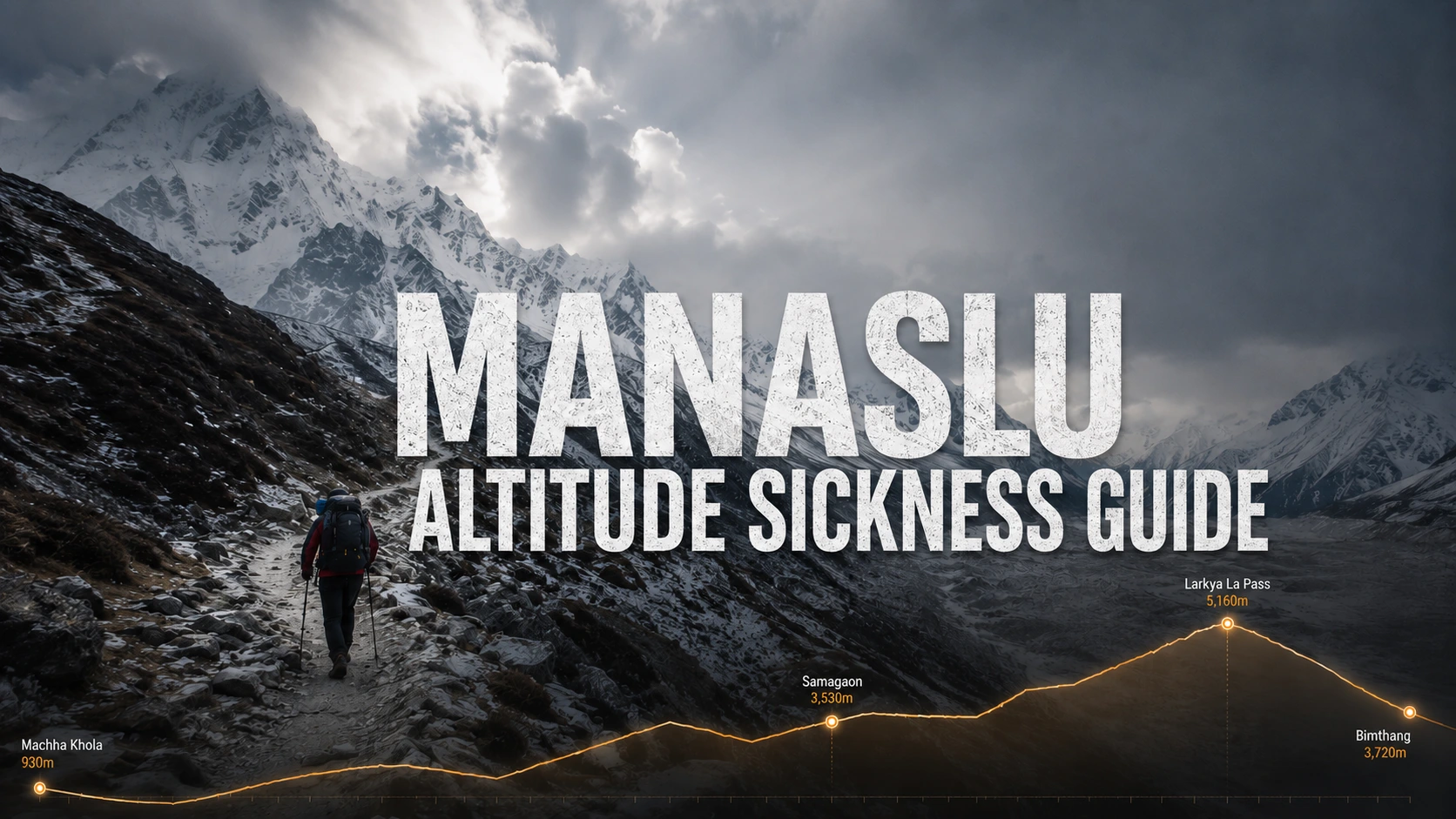
Manaslu Altitude Sickness : Symptoms, Types & Preventions
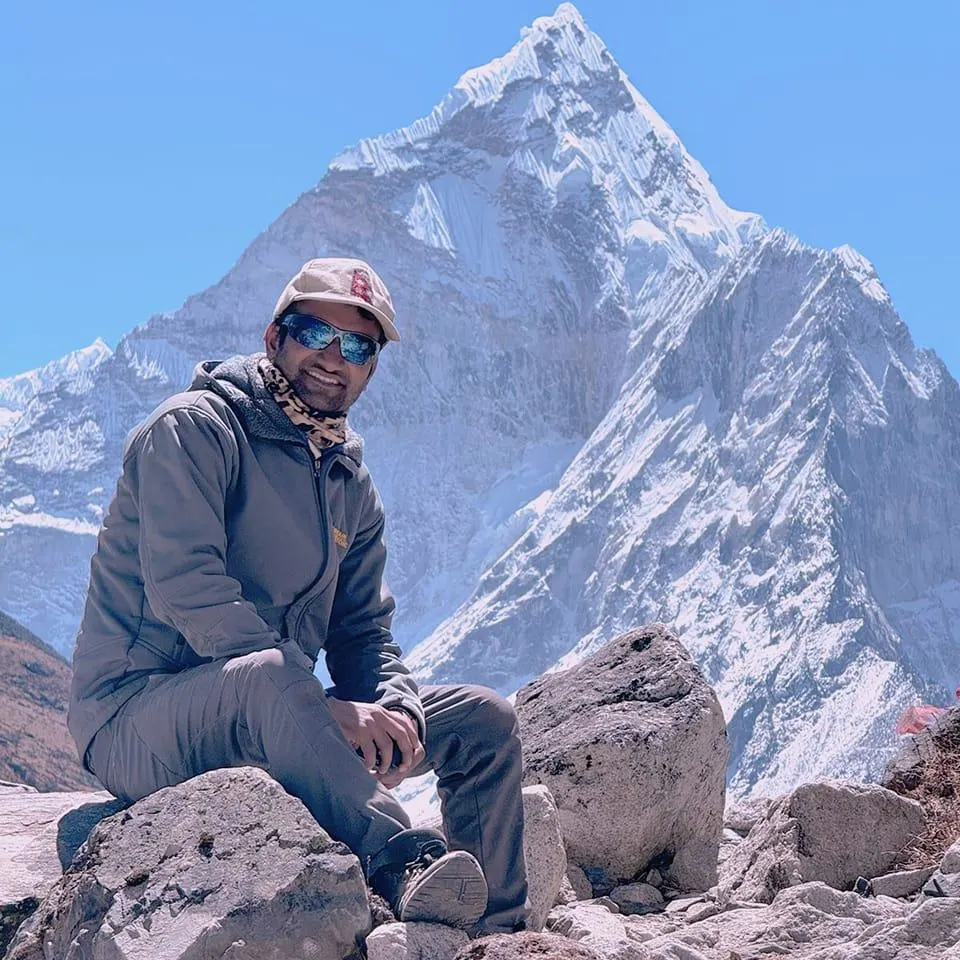
By Pralad Simkhada — TAAN-Certified Senior Guide | 10+ Years Experience Last Updated: June 2026
If there’s one thing every Manaslu Circuit trekker should know before booking, it’s altitude sickness. While views, gear, and permits matter, altitude is the most common reason trekkers must end their journeys early. Fortunately, it’s also one of the most preventable risks. The Manaslu Circuit Trek is strenuous for beginners because of its high altitude, long trekking days, and the 5,160 m Larkya La Pass. With good fitness, gradual pacing, and proper acclimatization, beginners can complete the trek.
At Adventure Mountain Treks, we’ve guided trekkers on the Manaslu Circuit for years and have seen how altitude affects people along this route. In this guide, we’ll cover what altitude sickness is, why it’s a concern on the Manaslu Circuit, how to recognize the symptoms, and what to do if they appear.
If you’re planning your trek, check out our complete Manaslu Circuit Trek guide for details on the itinerary, permits, and costs, or compare it with Everest Base Camp and Annapurna to find the trek that suits you best.
What Is Altitude Sickness, and Why Does Manaslu Carry Extra Risk?
Altitude sickness happens when your body cannot get enough oxygen fast enough to keep up with the elevation you have climbed to. As you go higher, the air pressure drops, which means each breath delivers less oxygen to your bloodstream. Your body responds by breathing faster, your heart rate climbs, and over a period of days it starts producing more red blood cells to carry oxygen more efficiently. That adjustment process is acclimatization, and it cannot be rushed.
Most people start to notice the effects of altitude somewhere above 2,500m, though the threshold varies from person to person. On the Manaslu Circuit, trekkers typically begin to feel it gradually from around Namrung (2,630m) onward, with the real test coming during the four to five consecutive days spent above 3,500m in the lead-up to Larkya La Pass (5,106–5,160m).
What makes Manaslu worth a dedicated guide on this topic, rather than generic altitude advice, comes down to three things specific to this route:
- A long stretch at altitude. Unlike a trek with one high point and a quick descent, Manaslu keeps you above 3,500m for multiple consecutive nights — at Samagaon, Samdo, and Dharamsala — before the pass itself.
- Remoteness. Medical posts are sparse beyond Jagat, and above Samagaon there is essentially none. Evacuation from Dharamsala or the pass depends heavily on helicopter access and weather, which is not always available.
- One demanding pass-crossing day. Larkya La is crossed in a single long push, typically an 8–9 hour day starting around 4:00 AM, descending over 1,400m to Bimthang. There is no easy retreat partway through.
None of this means the trek is unsafe. It means altitude management has to be deliberate, not an afterthought.
Altitude is only one part of the challenge. To understand the physical demands, terrain, daily walking hours, and overall preparation required, read our Manaslu Circuit Trek difficulty guide.
The Three Stages: AMS, HACE, and HAPE
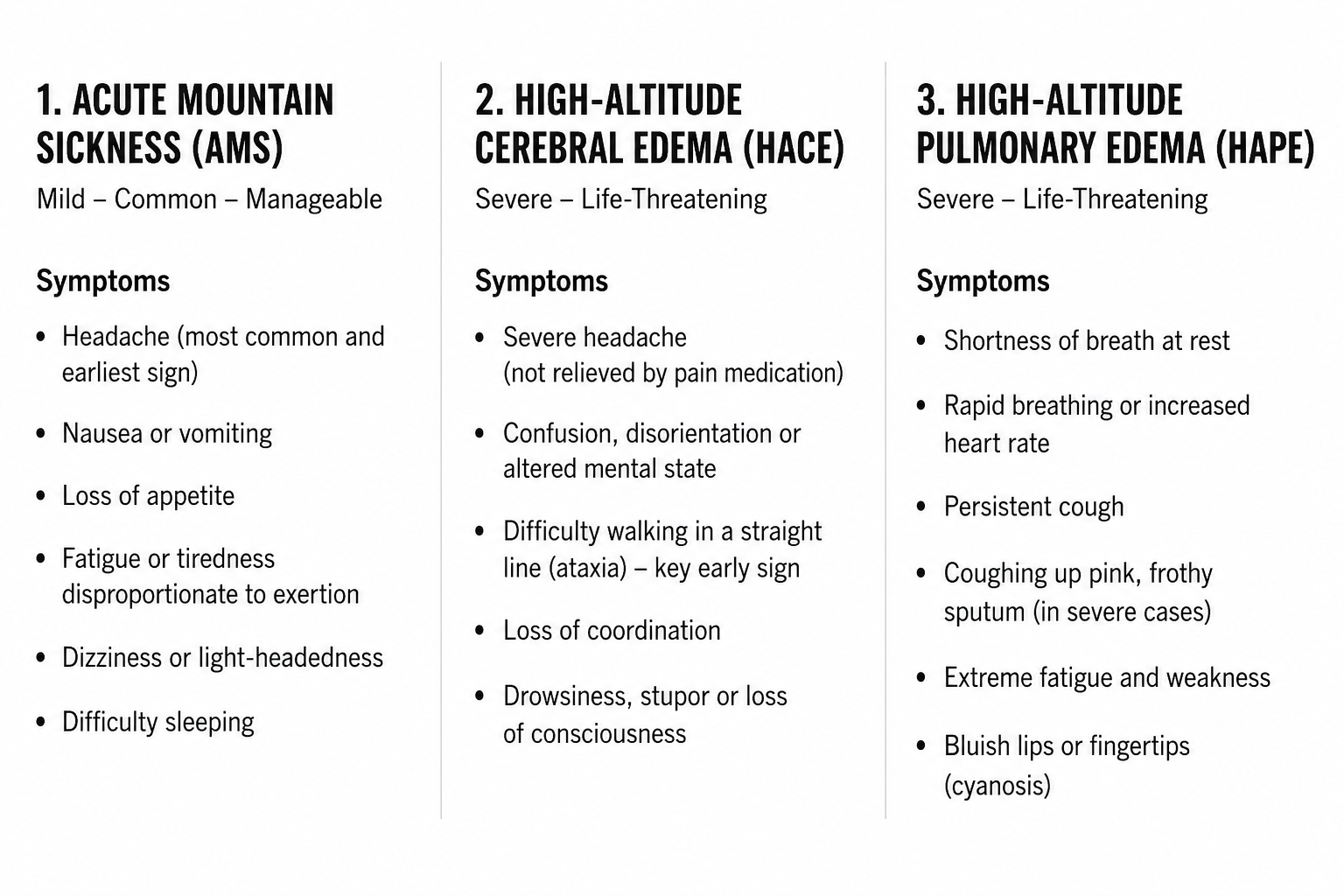
Altitude illness on Manaslu falls into three recognized categories, and trekkers should be able to name all three before they fly to Kathmandu.
Acute Mountain Sickness (AMS)
AMS is the mildest, and by far the most common form, and almost every trekker who goes above 3,000m will feel some version of it. Symptoms typically show up within 6–12 hours of arriving at a new altitude and include:
- Headache (the most common and earliest sign — never dismiss it)
- Nausea or loss of appetite
- Fatigue that feels disproportionate to the effort of the day
- Dizziness or lightheadedness
- Poor or disrupted sleep
Mild AMS is manageable. It is not a reason to panic, but it is a clear signal to stop ascending, rest, hydrate, and let your guide know.
HACE — High Altitude Cerebral Edema
HACE is what happens when AMS is ignored and worsens. Fluid builds up around the brain. Warning signs include confusion, an inability to walk in a straight line (your guide may ask you to walk heel-to-toe as a field test), loss of coordination, and a severe headache that does not respond to ibuprofen or paracetamol. HACE is a medical emergency. The only treatment is immediate descent, ideally combined with supplemental oxygen if available.
HAPE — High Altitude Pulmonary Edema
HAPE involves fluid accumulating in the lungs rather than around the brain, and it can develop with or without AMS. Warning signs include breathlessness even at rest, a persistent cough (sometimes producing pink, frothy mucus in severe cases), and a bluish tinge to the lips or fingertips. Like HACE, HAPE requires immediate descent and is a genuine emergency.
The takeaway that matters most: both HACE and HAPE are preventable in the vast majority of cases. They develop when early AMS symptoms are pushed through rather than respected.
Why the Manaslu Circuit's Altitude Profile Is Different?
It's easier to understand the risk when you look at the actual altitude gains instead of just hearing that the trek is at high altitude.
| Location | Altitude | Days at this elevation |
|---|---|---|
| Machha Khola (start) | ~970m / 2854ft | Day 1 |
| Namrung | 2,630m / 8,629ft | Day 4 |
| Lho | 3,180m / 10,433ft | Day 5 |
| Samagaon | 3,530m / 11,578ft | Days 6–7 (acclimatization day) |
| Samdo | 3,860m / 12,6604ft | Day 8 |
| Dharamsala (Larkya Phedi) | 4,460m / 14,633ft | Day 09 |
| Larkya La Pass (high point) | 5,160m / 16,924ft | Day 10 |
| Bimthang (descent) | 2,300m / 7,546ft | Day 11 |
| Besi Sahar to Kathmandu | 1,300m/4,592ft | Day 13 |
A common mountain guideline is to gain no more than 500m of sleeping altitude per day above 3,000m. It also recommends an acclimatization day for every 1,000m gained.
The climb from Samdo (3,860m) to Dharamsala (4,460m) gains around 600m in a single day, which is above the recommended limit.
The following day is even more demanding, taking trekkers above 5,100m before a long descent to Bimthang.
This is why a rest day at Samagaon is included in well-planned itineraries. It gives the body time to adapt before higher elevations.
Shortened 10–12 day itineraries often skip proper acclimatization, increasing the risk of altitude sickness.
A similar approach is used on the Everest Base Camp trek, where acclimatization days at Namche Bazaar and Dingboche help trekkers adjust safely to altitude.
Recognizing Symptoms Early: A Day-by-Day Risk Map
Knowing when on the trek to be most alert matters as much as knowing the symptoms themselves.
Days 1–4 (Kathmandu to Namrung, up to ~2,630m): Low risk. Most trekkers feel completely normal here.
Days 4–5 (Namrung to Lho, ~2,630m–3,180m): Mild symptoms can start to appear — a slight headache by evening, reduced appetite. This is normal, but worth mentioning to your guide so it gets tracked.
Days 6–7 (Samagaon, 3,520m, with acclimatization day): Real attention begins here. The acclimatization hike follows "climb high, sleep low" — gain altitude during the day, return to sleep lower. Watch for headaches that don't resolve with rest, or appetite loss continuing into a second day.
Days 8–09 (Samdo to Dharamsala, 3,860m–4,460m): The highest-risk window before the pass. Broken sleep and mild breathlessness at rest are common and not automatically alarming, but a worsening headache, confusion, or coordination problems should be reported immediately.
Day 10 (Larkya La Pass crossing, up to 5,160m): The most physically demanding day. Watch for sudden disorientation, severe breathlessness disproportionate to the pace, or unexplained stumbling. Guides carry pulse oximeters on this day specifically because oxygen desaturation can be hard to self-assess at 5,000m+.
A simple habit that works well is to rate your headache and energy level out of 10 each evening and tell your guide, especially on high-altitude routes such as the Manaslu Rupina La Pass Trek. Trends matter more than any single day's reading.
Our Acclimatization Protocol at Adventure Mountain Treks
At Adventure Mountain Treks, acclimatization is a key part of every Manaslu Circuit itinerary. We include a dedicated acclimatization day at Samagaon (3,520m), allowing trekkers to adjust gradually before moving to higher elevations.
On this day, we follow the proven "climb high, sleep low" approach. Trekkers take a short hike to higher points such as Birendra Tal or in the direction of Manaslu Base Camp before returning to Samagaon for the night.
Throughout the trek, our guides keep a close watch on each trekker's condition through regular health checks and daily conversations about how they are feeling. We also encourage proper hydration, steady pacing, and avoiding alcohol at higher altitudes.
Over the years, we have found that most altitude-related issues can be managed when symptoms are recognized early. That's why we encourage trekkers to communicate openly with their guides, ensuring any concerns are addressed before they become serious.
Prevention: What Actually Works
Beyond the structured itinerary, a handful of habits make a measurable difference on this specific trek.
Ascend slowly. Above 3,000m, gaining no more than 500m of sleeping elevation per day is the benchmark. Walk your own pace — "pole pole," as it's known in mountain guiding circles, meaning slowly, slowly.
Hydrate consistently, not just when thirsty. Aim for 3–4 liters daily. Dehydration produces symptoms — headache, fatigue, dizziness — that overlap almost exactly with early AMS, making it harder to tell the two apart.
Eat regularly even without appetite. Carbohydrate-heavy meals (dal bhat is genuinely useful here) require less oxygen to metabolize than fat or protein, which matters when oxygen is the scarce resource.
Avoid alcohol, sleeping pills, and tobacco above 3,000m. All three depress breathing rate during sleep, which is exactly the wrong direction at altitude.
Train beforehand. Fitness does not prevent AMS directly — fitness and altitude tolerance are not the same thing — but a body that isn't also fighting exhaustion has an easier time honestly recognizing symptoms rather than attributing a headache to tiredness. For full training and gear preparation, see our Manaslu Circuit Trek guide.
Altitude Sickness Medications: What Trekkers Should Know
A few medication types are commonly prescribed for altitude sickness. None should be self-prescribed; talk to your doctor before the trek.
Carbonic anhydrase inhibitor (brand name Diamox). The most widely used preventive option. Speeds up natural acclimatization by promoting faster, deeper breathing. Usually started a day before ascent. Mild side effects: tingling fingers, frequent urination.
Corticosteroid (brand name Dexamethasone). Used when the option above isn't tolerated, or to manage worsening symptoms. Doesn't aid acclimatization the same way.
Over-the-counter pain reliever (ibuprofen). A lower-strength preventive choice for those avoiding prescription drugs. Less effective than the options above.
Fever and pain reducer (acetaminophen/paracetamol). Comparable to ibuprofen for some trekkers. Widely available, generally well tolerated.
Calcium channel blocker. Not for routine prevention — used specifically for trekkers at higher risk of HAPE (fluid in the lungs).
The right choice, dose, and timing depend on your health history. See your doctor a few weeks ahead so you have time for a trial run if needed.
No medication replaces a sensible itinerary, hydration, and honest symptom reporting. None of them "treat" HACE or HAPE — only immediate descent does.
What to Do If You Get Symptoms on the Trail?
If symptoms are mild (headache, slight nausea, mild fatigue): Stop ascending for the day. Rest, hydrate, eat something even if you don't feel like it, and tell your guide. In most cases, symptoms improve within 24 hours at the same altitude.
If symptoms are moderate and not improving with rest (persistent headache, vomiting, increasing fatigue): This is the point to descend, even if only by a few hundred meters to a lower village. Waiting to "see if it passes" is the most common mistake we see.
If symptoms are severe (confusion, loss of coordination, breathlessness at rest, coughing with pink-tinged mucus): This is HACE or HAPE territory. Immediate descent is the only effective treatment, with supplemental oxygen if it is available. This is also when helicopter evacuation becomes the relevant conversation, which is why insurance coverage matters so much (more below).
Adventure Mountain Treks’ guide helps trekkers manage altitude safely, recognize symptoms early, and make the right decision when descent is needed.
The focus is always on trekker safety and proper acclimatization, rather than simply completing the itinerary.
Who Is at Higher Risk?
A point worth stating clearly: altitude sickness does not correlate reliably with age, fitness level, or trekking experience. A very fit 28-year-old marathon runner can develop AMS just as easily as a moderately active 55-year-old, and sometimes more easily, because fitness affects stamina, not how efficiently your individual physiology adapts to lower oxygen.
That said, a few factors are worth flagging honestly with your doctor before booking:
- A previous episode of altitude sickness above 3,000m on an earlier trip
- Pre-existing heart or lung conditions, including controlled high blood pressure or asthma
- Pregnancy (high-altitude trekking above 3,000m is generally not recommended during pregnancy)
- Sleep apnea or other conditions affecting breathing during sleep
None of these are automatic disqualifiers, but each warrants a conversation with a doctor and, in some cases, a frank conversation with us about pacing before you commit to a departure date.
Ever wondered how difficult the Manaslu Circuit Trek really is? Read our complete difficulty guide to learn about the fitness requirements, terrain, altitude challenges, and what to expect each day.
How Our Guides Help You Stay Safe
A licensed guide is required on the Manaslu Circuit, but their role goes far beyond permits. In this remote, high-altitude region, guides are essential for safety.
At Adventure Mountain Treks, our guides are trained to recognize early signs of altitude sickness, monitor trekkers' condition, and conduct regular oxygen level checks throughout the trek.
If symptoms appear, they can adjust the plan or recommend descent when needed. They also carry communication devices and can arrange emergency evacuation if required.
Their experience on the Manaslu Circuit helps ensure a safer and more enjoyable trekking experience.
Evacuation and Insurance: The Safety Net You Need
Travel insurance for the Manaslu Circuit is not just a formality; it is an important part of trekking safely. In an emergency, a helicopter evacuation can cost several thousand US dollars, especially at higher altitudes.
Before buying a policy, make sure it covers:
Trekking above 5,000m, including the crossing of Larkya La Pass (5,106–5,160m).
Emergency helicopter evacuation as a covered benefit.
Trip cancellation or interruption due to weather, illness, or other unforeseen situations.
At Adventure Mountain Treks, all trekkers must have valid travel insurance with helicopter evacuation coverage before permits are processed. This is both our safety requirement and a requirement for trekking in the Manaslu Restricted Area.
Our guides carry communication devices and can quickly coordinate with helicopter operators in Kathmandu if an emergency evacuation becomes necessary.
Acclimatization Checklist
A quick reference to keep on hand before and during the trek:
- Ascend gradually — no more than 500m of sleeping elevation gain per day above 3,000m
- Take both acclimatization days seriously — Samagaon especially is not optional
- Drink 3–4 liters of water daily, even when you don't feel thirsty
- Eat regularly, favoring carbohydrate-heavy meals like dal bhat over heavy, greasy food
- Avoid alcohol, sleeping pills, and smoking above 3,000m
- Practice "climb high, sleep low" on rest days rather than staying static
- Never ascend with an unresolved headache — rest a day instead
- Report symptoms early and honestly to your guide, even minor ones
- Carry and know how to use your medication (Diamox or doctor-approved alternative) if prescribed
- Confirm your insurance covers evacuation above 5,000m before you fly to Kathmandu
Our 13-Day Manaslu Circuit Trek itinerary is carefully designed with acclimatization as a priority, allowing trekkers to adjust gradually to the altitude and significantly reducing the risk of altitude sickness.
Frequently Asked Questions
At what altitude does altitude sickness typically start on the Manaslu Circuit?
Most trekkers notice mild effects between 2,500m and 3,000m, with the real risk window opening from Samagaon (3,520m) onward through the four to five consecutive days above 3,500m before the pass.
Is Diamox necessary for the Manaslu Circuit?
It's not mandatory; many trekkers complete the trek without it through a well-paced itinerary and proper hydration. Discuss it with your doctor before departure rather than deciding on the trail.
How is altitude sickness different on Manaslu compared to Everest Base Camp?
Manaslu involves more consecutive nights above 3,500m and a single demanding pass-crossing day at higher elevation. EBC, by contrast, begins at higher altitude almost immediately after the Lukla flight.
Can children or older trekkers do the Manaslu Circuit safely?
Age alone isn't the determining factor — overall health and willingness to follow acclimatization pacing matter more. That said, the limited medical access above Jagat is worth weighing carefully for any trekker with underlying health conditions.
What happens if I need to descend during the trek — do I lose the rest of my trip?
Not necessarily. Mild AMS often resolves with a single rest day at the same altitude, after which trekkers continue normally. Only moderate-to-severe symptoms require descent or evacuation.
Is the Manaslu Circuit more dangerous than other treks in Nepal because of altitude sickness?
It carries a comparable AMS risk to other high-altitude circuits in Nepal, but the remoteness — limited medical posts and evacuation depending on helicopter access — makes prevention and early symptom reporting more important here.
What are 4 symptoms of altitude sickness?
The four most common early symptoms of Acute Mountain Sickness are headache, nausea, fatigue, and dizziness. If these appear alongside confusion, loss of coordination, or breathlessness at rest, that signals a more serious progression toward HACE or HAPE and requires immediate descent.
What altitude is risky for altitude sickness?
Most people can start to feel mild effects above 2,500m, though risk increases meaningfully above 3,000m. On the Manaslu Circuit, this means symptoms become more likely from Namrung (2,630m) onward, with the highest-risk window running from Samagaon (3,520m) through the Larkya La Pass crossing (5,106–5,160m).
Who suffers most from altitude sickness?
Altitude sickness does not reliably correlate with age or fitness — it can affect very fit trekkers as readily as less active ones. People with a prior history of altitude sickness, those who ascend too quickly, and those who skip acclimatization days are at the highest practical risk, regardless of how fit they are.
Final Word from the Trail
Altitude sickness is not a reason to avoid the Manaslu Circuit. It is a reason to take the itinerary, the acclimatization day, and your own symptoms seriously. The trek rewards patience — every successful crossing of Larkya La Pass we have guided started the same way: a slow, deliberate pace, an honest conversation about how someone was feeling each evening, and a willingness to let the mountain set the timeline rather than the calendar.
If you are ready to plan your departure, our Manaslu Circuit Trek package has current 2026 departure dates, permit costs, and the three package tiers we offer. For the full day-by-day itinerary and gear list, see our complete Manaslu Circuit Trek guide.
If you have specific health questions about your own trip, reach out to us directly at info@adventuremountaintreks.com or +977-9862790129 — we are happy to talk through your itinerary before you book.