The Definitive Guide to the Manaslu Circuit Trek in Autumn (September, October & November) 2026
Namaste and welcome. I am Pralad Simkhada, a TAAN-certified senior trekking guide with over a decade of experience leading expeditions across the Himalayas. Over the years, I have successfully guided more than 20 groups through the rugged trails of the Manaslu region. I have seen these trails in every condition imaginable, from pristine, crisp blue skies to unexpected high-altitude snowstorms.
If you are planning to test your boots on the legendary Manaslu Circuit Trek in Autumn 2026, you have chosen an extraordinary window. But a successful trek requires moving past generic internet summaries and understanding the practical, lived realities of the trail. This field-tested guide provides the ground-level truths, daily observations, and tactical advice you need for an unforgettable journey.
Key Takeaways
- The Ultimate Window: October is the undisputed peak for crystal-clear mountain views and trail stability, while September offers lush green landscapes with fewer crowds, and November brings crisp, cold air and empty trails.
- Strict Regulatory Compliance: The Manaslu Circuit remains a restricted region. You must trek with a registered guide and a minimum group size of two people.
- Acclimatization is Non-Negotiable: Crossing the Larkya La Pass at 5,106 meters (16,752 feet) requires a careful itinerary, proper hydration, and an understanding of your body's signals.
- Rapid Autumn Transitions: The weather shifts dramatically from the lingering post-monsoon rains of early September to the freezing winter winds of late November. Packing a strategic layering system is vital.
1. Introduction: The Magic of Autumn in Manaslu
When trekkers ask me to compare the crowded, classic routes like Everest or Annapurna with the Manaslu Circuit, I tell them that Manaslu offers a rare journey back in time. It preserves the wild, untamed spirit of old-school Himalayan trekking while providing the comfort of village teahouses.
Autumn is the most famous trekking season in Nepal for a clear reason: the heavy monsoon rains wash the air clean of dust and pollution, leaving impossibly sharp mountain silhouettes against deep blue skies. If your goal is to experience the high-altitude world at its most stable and visually spectacular, autumn is your season.
Who Should Choose This Trek?
This journey is tailor-made for:
- The Adventure Enthusiast: Trekkers who want a true wilderness experience without the commercialized crowds of the Everest Base Camp trail.
- The Culturally Curious: Those who want to witness the fascinating transition from Hindu-influenced lowlands to the ancient, Tibetan-Buddhist Bon culture of the highlands.
- The Prepared Trekker: Individuals with good cardiovascular fitness who respect the mountains, understand the importance of pacing, and appreciate a rustic teahouse environment.
Who Should Reconsider?
- Absolute Beginners: If you have never hiked multi-day routes with significant elevation gains, you should build your endurance on shorter trails like the Ghorepani Poon Hill or Langtang Valley before attempting Manaslu.
- Luxury Seekers: The teahouses along the Manaslu route are clean and hospitable, but they are simple. If you cannot enjoy a trip without attached Western toilets, heated rooms, and extensive menus at every stop, this trail might prove frustrating.
Autumn vs. Spring: The Definitive Verdict
While spring (March to May) is a stunning season, with blooming rhododendron forests and warming temperatures, I consistently recommend autumn to those chasing flawless mountain views. In spring, the afternoon heat often causes haze and cloud buildup around the peaks. In contrast, autumn offers unparalleled atmospheric clarity, lower humidity, and a dry trail surface that minimizes the risks of mud and landslides.
2. What is the Autumn Season in Nepal?
In Nepal, autumn is not just a change of leaves; it is a dramatic shift in global weather systems. As the Indian Ocean monsoon retreats south, the wind direction changes, bringing cool, dry air from the north across the Tibetan Plateau.
- September: This is the bridge month. The first two weeks frequently see lingering post-monsoon clouds and occasional afternoon showers. By the third week, the weather shifts dramatically, clearing the air and kicking off the official trekking season.
- October: This is the crown jewel of the Himalayan calendar. The climate stabilizes completely, day temperatures are highly comfortable for walking, and the visibility remains nearly perfect from morning to night.
- November: This month brings a transition into the pre-winter phase. The skies remain brilliantly clear, but temperatures drop rapidly, especially above 3,500 meters. The upper valleys become cold and quiet, offering a serene experience for those who pack warm layers.
3. Is Autumn the Best Time for the Manaslu Circuit?
To help you balance expectations, here is a transparent look at the pros and cons of an autumn trek based on my years of leading teams through the region.
The Pros
- Unmatched Stability: You face a very low risk of flight cancellations or major trail disruptions due to weather.
- Crisp Visuals: This is the absolute best time for landscape photography; the light is clean, and the stars at night are unforgettable.
- Cultural Richness: Nepal's largest, most vibrant festivals take place during this window, injecting an incredible energy into the lowland villages.
- Dry Footing: The trails are clear of monsoon mud, making steep descents much safer and reducing the risk of slipping on wet stones.
The Cons
- High Trail Traffic: Because the weather is ideal, October sees the highest number of trekkers on the route. You will share the path and the teahouses with other groups.
- Premium Logistics: Teahouses fill up quickly. If you do not travel with an experienced guide who can call ahead to book rooms, you might find yourself sleeping in dining halls or tents at high camps like Dharamsala.
- Dropping Temperatures: By mid-November, the high-altitude cold becomes intense, demanding high-quality gear and a strong tolerance for freezing nights.
4. Month-by-Month Field Analysis
Each autumn month has its own unique character. Choosing the right one depends on your personal priorities.
September: The Post-Monsoon Transition
September Profile:
Visibility: ⭐⭐⭐☆☆ (Improving weekly)
Crowds: ⭐⭐☆☆☆ (Very quiet early on)
Temperature: ⭐⭐⭐⭐☆ (Warm and humid below)
Trail Condition: ⭐⭐⭐☆☆ (Some mud/landslide debris)
Early September is an extension of the monsoon. The rivers are roaring, waterfalls are at their maximum volume, and the valleys are vibrant emerald green.
- The Reality on the Ground: You will likely encounter wet trails and a few leeches below Jagat during the first week. Landslide zones near Tatopani and Yaru Bagar require careful monitoring.
- The Guide’s Insight: I love the second half of September. The crowds are minimal, the air is warm, and when the clouds break, the freshly snow-capped peaks against the lush green valleys look spectacular. It is perfect for independent-minded adventurers who do not mind occasional rain.
October: The Golden Peak
🍂 October Trek Conditions
Visibility: ⭐⭐⭐⭐⭐ (Flawless)
Crowds: ⭐⭐⭐⭐⭐ (Peak Season)
Temperature: ⭐⭐⭐⭐☆ (Perfect trekking weather)
Trail Condition: ⭐⭐⭐⭐⭐ (Dry, firm, and fully repaired)
October is the undisputed peak season for the Manaslu Circuit. The monsoon is completely gone, leaving dry trails and perfectly crisp mountain views.
- The Reality on the Ground: The weather is highly reliable. Days are comfortably warm in t-shirts in the lowlands, and nights are crisp but manageable in the highlands.
- The Guide’s Insight: One challenge I frequently notice in October is room availability in small settlements like Lho, Samdo, and Dharamsala. Because I have built strong personal relationships with teahouse owners over the last ten years, my groups always secure rooms. If you are planning an October trek, you must book early and work with an agency that can secure logistics well in advance.
November: The Crisp, Cold Solitude
❄️ November Trek Conditions
Visibility: ⭐⭐⭐⭐⭐ (Sharp and piercing)
Crowds: ⭐⭐☆☆☆ (Dwindling fast)
Temperature: ⭐⭐☆☆☆ (Freezing at night)
Trail Condition: ⭐⭐⭐⭐☆ (Dry, but watch for ice)
November brings a sharp drop in temperature but rewards you with absolute clarity and quiet trails. The autumn crowds head home, leaving the mountains to a few dedicated trekkers.
- The Reality on the Ground: Days remain sunny and beautiful for trekking, but as soon as the sun drops behind the ridges, temperatures plummet. Above Namrung, night temperatures consistently drop below freezing.
- The Guide’s Insight: I generally advise trekkers in November to prepare for winter conditions. You must bring a high-quality $-20^\circ\text{C}$ rated sleeping bag and a heavy down jacket. By late November, water sources at Dharamsala freeze solid overnight, and you need to watch out for black ice on the ascent to Larkya La. However, the reward of having these massive mountain vistas entirely to yourself is well worth the extra layer of fleece.
The optimal seasons for the Manaslu Circuit Trek are spring (March–May) and autumn (September–November).
These months offer stable weather, clear mountain views, and safer conditions for crossing Larkya La Pass.
5. Microclimate Weather & Trail Realities by Altitude
The Manaslu Circuit covers an immense altitude span—starting below 1,000 meters and topping out at 5,106 meters. This means you will walk through subtropical jungles and alpine fields on a single journey. Here is a breakdown of what to expect at key points along the route during the autumn months.
Manaslu Circuit Trek – Elevation & Climate Profile
| Location | Elevation (m) | Avg. Day Temp | Avg. Night Temp | Trail & Environmental Conditions |
|---|---|---|---|---|
| Soti Khola / Machha Khola | 700 – 900 | 28°C – 32°C | 18°C – 22°C | Humid, lush jungle trail. Muddy in early Sept; dusty by Nov. Warm enough for shorts/t-shirts. |
| Jagat | 1,340 | 22°C – 26°C | 12°C – 15°C | Firm stone-paved trails. Narrow river gorge creates breezy afternoon winds. |
| Namrung | 2,660 | 15°C – 18°C | 4°C – 8°C | Transition into pine and rhododendron forests. Crisp, clear trails; light fleece needed. |
| Lho / Samagaon | 3,180 – 3,530 | 10°C – 14°C | -2°C – 3°C | Open alpine valleys with Mt. Manaslu views. Frost forms on pastures by October. |
| Samdo | 3,860 | 6°C – 10°C | -6°C – -2°C | High alpine dry zone. Strong winds; thin air requires slow, steady pacing. |
| Dharamsala (Larkya Phedi) | 4,460 | 2°C – 6°C | -12°C – -5°C | Rocky moraine landscape. Water pipes freeze; occasional late autumn snow. |
| Larkya La Pass | 5,106 | -5°C – 0°C | N/A | Extremely cold, high winds. Hard-packed snow/ice common by mid-November. |
| Bhimtang | 3,720 | 8°C – 12°C | -4°C – 0°C | Wide glacial valley. Steep descent over scree; surrounded by pine forests. |
Real-World Trail Safety and Hazards
- Landslide Areas: The sections between Khorlabesi and Tatopani, as well as the stretch before Jagat, are prone to rockfall. In September, when the ground is still drying out, keep your eyes on the upper cliffs and move through quickly without stopping for breaks in marked hazard zones.
- Bridges: The suspension bridges along the Manaslu route are well-engineered, modern steel structures. However, always yield to yak and mule trains. Step to the mountainside of the trail—never the cliff side—while waiting for animals to pass.
- Ice and Snow: On the morning climb up Larkya La from Dharamsala, the trail crosses moraine rock that can hold hidden patches of ice. I recommend carrying a lightweight pair of microspikes in your daypack, especially from late October onward.
6. Mountain Panoramas & Photography Windows
For photographers and mountain lovers, autumn in Manaslu is unparalleled. The low humidity levels mean you can see for miles across the rugged landscape.
Key Peaks on Display
- Mt. Manaslu (8,163m): The eighth highest peak in the world dominates your view from Lho all the way to Samdo. The classic sunrise shot from the monastery at Lho reveals its dramatic double peak bathed in gold.
- Himalchuli (7,893m) & Ngadi Chuli (7,871m): These peaks flank the trail early on, offering towering walls of ice and rock above the deep river gorges.
- Ganesh Himal Range: Visible as you look eastward during the first few days of the trek, providing a jagged, snow-capped horizon.
- Cheo Himal & Larkya Peak: These peaks frame the high-altitude approach to the pass, showing off raw, steep alpine architecture.
- Annapurna II (7,937m): As you descend the western slope from the Larkya La into Bhimtang, Annapurna II bursts into view, welcoming you to the edge of the Annapurna region.
The Golden Hour Rule
In October and November, mountain clouds typically stay low or don't form at all until mid-afternoon. Your best window for photography opens between 6:00 AM and 8:30 AM. Get up early, brave the cold, and set up your camera before the first rays of light touch the peaks.
7. Autumn Flora, Fauna, and Ecology
Trekking through the Manaslu Conservation Area (MCAP) in autumn offers a look at a unique ecosystem preparing for the coming winter.
- The Lowland Forests: Below Namrung, you walk through dense sub-tropical forests of oak, pine, and maple. In October and November, these leaves shift to warm hues of gold and rust, making a beautiful contrast against the white peaks.
- The Alpine Zone: Above 3,000 meters, the trees give way to juniper bushes and low alpine scrub. You will see local villagers harvesting juniper leaves to use as traditional incense in nearby monasteries.
- Wildlife Encounters: Keep your eyes on the high, rocky ridges above Samdo and Samagaon. This is prime habitat for the Himalayan Blue Sheep (Bharal). I often spot herds grazing on the steep slopes.
- The Snow Leopard Connection: Where there are blue sheep, there are snow leopards. While these cats are incredibly elusive, finding their prints in the fresh dust or snow near Dharamsala is a thrilling reminder of how wild this region is.
- Birdlife: Look out for the colorful Danphe (Himalayan Monal), Nepal’s national bird, darting through the pine forests, alongside large Himalayan Griffons soaring on the thermal currents above the deep canyons.
8. Cultural Immersion: Festivals & Highland Life
Choosing an autumn trek also opens the door to experiencing Nepal's most festive and culturally rich season.
Lowland Celebrations: Dashain and Tihar
In September and October, the Hindu communities in the lower villages (Soti Khola to Jagat) celebrate Dashain and Tihar. You will see large bamboo swings erected in the villages, and families gathering to share blessings. As a guest on the trail, you may be invited to receive a Tika (a blessing of red rice placed on your forehead)—an authentic gesture of hospitality.
Highland Tibetan Culture: Samagaon and Samdo
As you step across the cultural bridge into the upper Nubri Valley, the influence shifts entirely to Tibetan Buddhism. The villages are filled with long mani stone walls, chortens, and prayer flags fluttering in the autumn wind.
Local Insight from Pralad: When walking past mani walls, chortens, or stupas, always pass them keeping them on your right-hand side. This is a central sign of respect in Buddhist tradition.
In late autumn, you can witness the local farmers in Samagaon gathering the last harvests of barley and buckwheat, and moving their herds of yaks down from the high summer pastures to warmer winter grounds.
9. The Teahouse Experience in Peak Season
The accommodation on the Manaslu Circuit has evolved significantly from the basic tent camping days of the past. Today, comfortable teahouses are available at every major stop. However, peak autumn conditions require a clear understanding of what to expect.
Food: Fueling Your Trek
The food along the route is fresh, hearty, and carbohydrate-rich. The staple dish is Dal Bhat (lentil soup, rice, and vegetable curry). It is nutritious, filling, and always comes with free refills.
My Professional Health Advisory: I strongly advise my clients to avoid eating meat products above Namrung. All meat must be carried up by porters from lower elevations without refrigeration. Sticking to a vegetarian diet, eggs, and local soups keeps your digestion running smoothly and avoids stomach bugs at high altitudes.
Accommodation Realities
Rooms are generally twin-share with wood or plywood walls and two single beds. In October, these teahouses operate at maximum capacity.
- Electricity & Charging: Solar charging is available in most dining halls for a small fee ($2 to $5 per device). Bring a high-capacity power bank to stay self-sufficient.
- WiFi and Connectivity: Ncell and NTC mobile networks work reasonably well up to Namrung. Above that, some teahouses offer paid satellite WiFi (such as Everest Link), though it can be slow and intermittent during peak hours.
- Hot Showers: Gas or solar-heated showers are available up to Samagaon for a small charge. I advise against taking hot showers above Samagaon; the sudden change in body temperature in freezing ambient air makes you susceptible to the "Khumbu cough" and respiratory chills.
10. Permits and Regulatory Requirements for 2026
Because the Manaslu Circuit runs along the border with Tibet, the Government of Nepal manages it as a restricted area to protect both local ecosystems and border security. You cannot trek the Manaslu Circuit independently. You must hire a licensed guide and travel with a minimum of two trekkers in your group.
To complete the full circuit, you need three distinct permits, which must be secured through a registered trekking agency using the updated regulations for restricted area trekking permits in Nepal.
MANASLU CIRCUIT PERMIT PACK
1. Manaslu Restricted Area Permit (RAP)
- Sept to Nov: $100 (first 7 days + $15 per day after 7 days
+ $15 per day after 7 days
- Dec to Aug: $75 (first 7 days)
+ $10 per day after 7 days
2. Manaslu Conservation Area Project (MCAP)
Fixed: NPR 3,000 (~$23)
3. Annapurna Conservation Area Project (ACAP)
Fixed: NPR 3,000 (~$23)
🇮🇳 SAARC Nationals (Indian Citizens)
MCAP: NPR 1,000
ACAP: NPR 1,000
Required Documents for Processing
To ensure your agency can issue your permits smoothly before you arrive in Kathmandu, you will need to provide:
- A clear color copy of your passport (valid for at least 6 months).
- Two recent passport-sized photographs.
- A valid tourist visa for Nepal.
11. Assessing Difficulty, Fitness, and High Passes
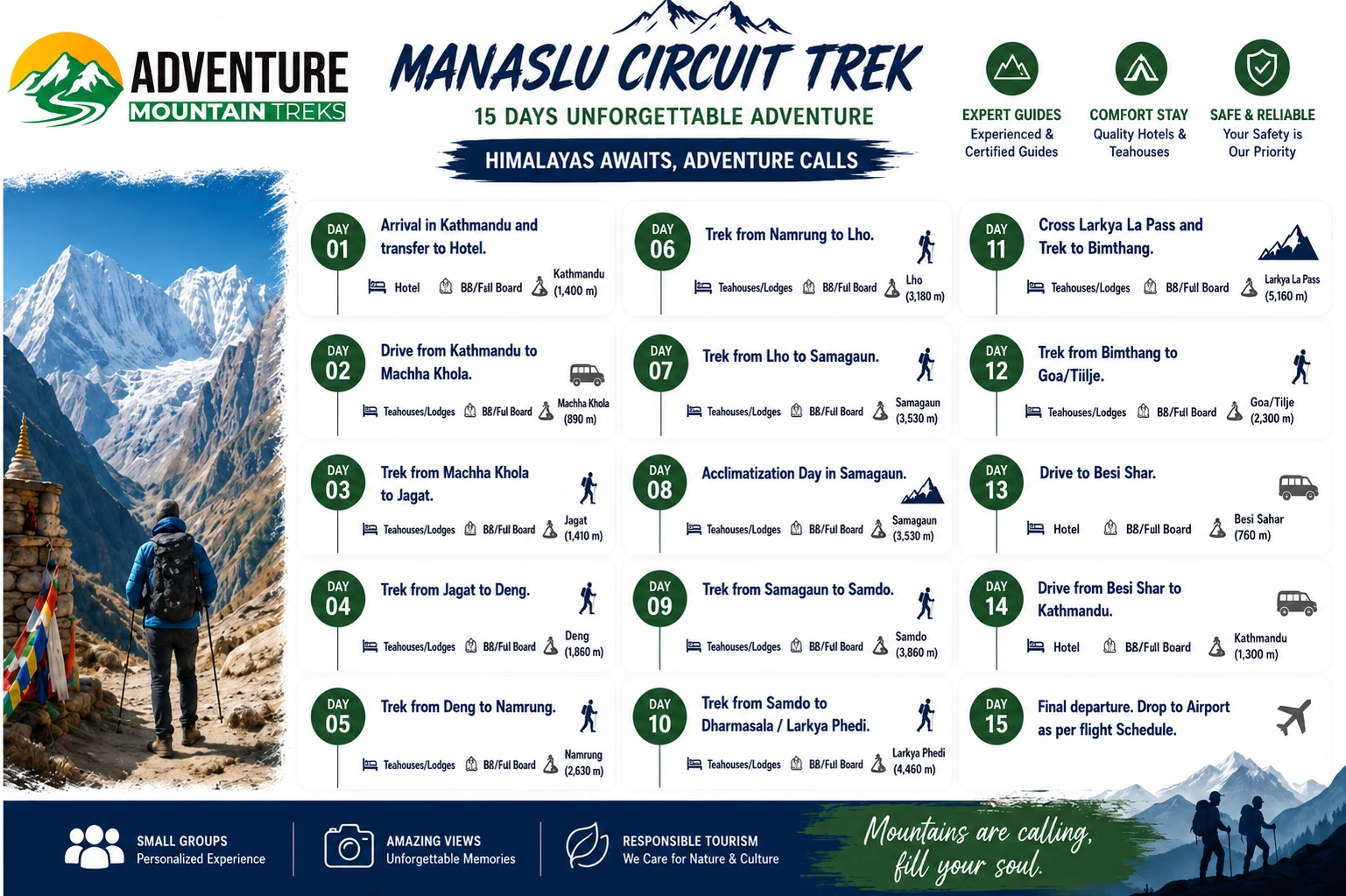
The Manaslu Circuit is classified as a challenging, high-altitude trek. It does not require technical mountaineering skills or rope work, but it demands serious physical endurance and mental grit. For a complete breakdown of trail profiles and daily elevation changes, take a look at our detailed Manaslu Circuit Trek difficulty guide.
Manaslu Circuit Trek Elevation Profile Key Milestones:
Physical Training Groundwork
You should begin a training regimen at least 8 to 12 weeks before your departure. Focus on:
- Cardiovascular Conditioning: 3-4 sessions a week of running, swimming, or cycling to build lung capacity.
- Leg Strength & Endurance: Squats, lunges, and step-ups.
- Real-World Simulation: The absolute best preparation is putting on your trekking boots, loading a backpack with 8-10 kg, and spending your weekends hiking steep, hilly trails.
The Ultimate Challenge: Crossing Larkya La (5,106m)
The day you cross the pass is long and demanding. We wake up at 3:30 AM in Dharamsala, eat a quick breakfast in the cold, and head out onto the trail by 4:30 AM.
The initial ascent is a slow, rhythmic grind over cold glacial moraines. The air is thin, and every step takes conscious effort. Once we stand on the pass among the prayer flags, the feeling of accomplishment is incredible. However, the day isn't over yet—you face a steep, knee-jarring descent of nearly 1,400 vertical meters down to Bhimtang. Using high-quality trekking poles here is essential for protecting your joints.
12. The Definitive Autumn Packing List
Packing for autumn requires a versatile layering system. You need to dress for warm, tropical sunshine in the lowlands and freezing sub-zero winds on the high pass.
The Layering Formula
- Base Layer: 3x moisture-wicking merino wool or synthetic t-shirts and thermal tops. Avoid cotton completely; it retains sweat and chills your core.
- Insulating Layer: A high-quality mid-weight fleece jacket or lightweight down sweater.
- Outer Layer: A windproof and waterproof breathable shell jacket (Gore-Tex or equivalent).
- High-Altitude Insulation: A thick, heavy down jacket with a hood (rated to comfort levels below freezing) for cold evenings and the early morning pass crossing.
Footwear & Extremities
- Sturdy, broken-in trekking boots with deep lug soles and reliable ankle support.
- 4-5 pairs of thick merino wool trekking socks, plus a clean pair kept dry exclusively for sleeping.
- Lightweight liner gloves coupled with insulated, windproof ski-style gloves.
- A warm fleece-lined beanie and a wide-brimmed sun hat for the lower valleys.
Electronics & Field Essentials
- A rugged 20,000mAh+ power bank (keep this stored inside your sleeping bag at night so the cold doesn't drain the battery cells).
- A dependable headlamp with extra batteries or a charging cable for early morning starts.
- Two 1-liter wide-mouth Nalgene water bottles.
- Water Purification: Water purification tablets or a hollow-fiber squeeze filter (like a Sawyer Squeeze). Do not use UV purifiers at high camp; if the water has tiny ice crystals or is freezing cold, UV treatment can lose its effectiveness.
For the Manaslu Circuit Trek, pack layered clothing, sturdy boots, warm gear, and essentials, while your Manaslu porter carries the heavier load.
MT. MANASLU EXPEDITION
Thinking Circuit?
Go Higher.
Take on the world's 8th-highest mountain with an experienced Himalayan expedition team.
Explore Manaslu Expedition →13. On-the-Trail Safety & Acclimatization Protocols
In my decade of guiding, the single biggest mistake I see trekkers make is rushing their journey. Altitude does not care how fit you are; it cares how well you adapt.
Managing Acute Mountain Sickness (AMS)
My groups follow a simple golden rule: Walk slowly (Bistari, Bistari). We maintain a conversational pace where you can hike and talk comfortably without gasping for breath.
- Hydration: Drink between 4 and 5 liters of clean water every single day. This helps oxygenate your bloodstream and flushes out metabolic waste.
- Acclimatization Rest Days: Our standard itinerary includes two dedicated rest days—one at Namrung or Lho, and a critical second rest day at Samagaon. On these days, we follow the time-tested mountaineering principle of "climb high, sleep low." We take a day hike up to the stunning Birendra Lake or Manaslu Base Camp, then return to Samagaon to sleep.
- Medical Emergency Prep: I carry a pulse oximeter on every trek to monitor my clients' oxygen saturation levels and heart rates every evening during dinner. If you show progressive symptoms of severe AMS (such as a persistent headache, loss of coordination, or confusion), we stop our ascent immediately and focus on descending safely.
- Evacuation Evac Insurance: Make sure your travel insurance policy explicitly covers emergency helicopter evacuation up to 6,000 meters. If a serious emergency occurs in the high valleys beyond Namrung, a helicopter is the only fast way to reach a hospital in Kathmandu.
14. Comprehensive Cost Breakdowns & Budgeting
Trekking in a restricted area involves specific fixed operational costs. Below is an honest look at what you should budget for an autumn trek in 2026.
The Standard Budget Profile ($1,200 – $1,600 USD)
This option covers all your core needs through a reputable local agency. It includes your required certified guide, a shared porter between two trekkers, all restricted area and conservation permits, ground transport via local off-road buses or shared jeeps, standard teahouse accommodation, and three meals a day.
The Premium/Luxury Budget Profile ($2,200 – $3,500+ USD)
For trekkers looking for maximum comfort, this package upgrades your transport to a private $4\times4$ Jeep from Kathmandu to the trailhead and back from Dharapani. It provides a private porter for each trekker, upgraded private rooms with attached bathrooms where available, unlimited hot showers, charging access, and stays in Kathmandu’s premium boutique hotels.
Estimated Out-of-Pocket Expenses to Budget On-Trail
[DAILY ON-TRAIL INCIDENTAL BUDGET]
├── Charging Devices: $2 - $5 / day
├── Satellite WiFi: $3 - $7 / day
├── Hot Showers: $3 - $5 / shower
├── Snacks/Bottled Soda: $2 - $5 / item
└── Recommended Guide/Porter Tipping Pool: $150 - $250 total per trekker
15. Who Should Trek in Autumn? (And Who Should Avoid It?)
Recommended For
- Photographers: If you want sharp, clear images of mountain ridges and starry night skies without clouds obscuring the peaks, October and November are ideal.
- Solo Travelers Joining Groups: Because autumn is popular, it is easy to connect with international groups to satisfy the two-person minimum permit rule.
- Couples and Friends: The clear weather and vibrant trail life create a fantastic shared adventure.
Not Recommended For
- Trekkers Seeking Complete Isolation: If you want a trail entirely to yourself, peak October will feel too busy. You would be better off choosing early March or mid-November.
- Those Sensitive to the Cold: If you struggle to sleep when temperatures drop below freezing, the high camps in late autumn will be uncomfortable.
16. Seasonal Head-to-Head Comparisons
To give you a clear overview of how the seasons compare, here is a detailed breakdown of the different trekking windows for the Manaslu Circuit.
| Metric | Autumn (Peak) | Spring (Shoulder) | Winter (Off-Season) | Monsoon (Low Season) |
| Months | September – November | March – May | December – February | June – August |
| Visibility | Exceptional; consistently clear mornings and afternoons. | Moderate; clear mornings with regular afternoon cloud cover. | Sharp visibility, but days are significantly shorter. | Low; frequent fog, heavy cloud cover, and mist. |
| Trail Quality | Dry, clean, firm, and fully open. | Good, with lingering snow on the high pass until mid-April. | Icy, frozen trails; Larkya La Pass is often closed by deep snow. | Very muddy, wet, and high risk of active landslides. |
| Crowd Levels | High; teahouses operate at or near full capacity. | Moderate; active but relaxed trail environment. | Very low; most high-altitude teahouses close for winter. | Empty; only local residents remain in the villages. |
| Scenery Focus | Snow-capped peaks against deep blue skies; autumn harvests. | Wild rhododendrons blooming; green valleys. | Stark, dramatic, snow-blanketed mountain wilderness. | Rushing waterfalls, swollen rivers, lush green forests. |
17. Frequently Asked Questions (20+ Expert Answers)
Q1: Is October really the best month for the Manaslu Circuit Trek?
Yes, if your priority is clear mountain views and stable weather. However, you will share the trail with more trekkers, and booking your space early is essential.
Q2: Can a beginner trek the Manaslu Circuit in autumn?
Yes, provided you are in excellent physical condition and choose an itinerary with built-in acclimatization days at Samagaon and Samdo. It is a demanding route, so completing a few shorter hikes beforehand is highly recommended.
Q3: Is snow expected on the Larkya La Pass during autumn?
In September and October, the pass is usually clear and dry. By mid-to-late November, the chances of encountering fresh snow and surface ice increase significantly.
Q4: How cold does it actually get in November?
While daytime temperatures remain comfortable for hiking, ranging from 8°C to 12°C, nighttime temperatures at high camps such as Dharamsala regularly drop to between -10°C and -15°C.
Q5: Can I complete the Manaslu Circuit Trek completely solo?
No. Government regulations mandate a minimum of two trekkers in a group accompanied by a licensed Nepali guide. Independent trekking without a guide is strictly prohibited.
Q6: How crowded are the teahouses in October?
They are busy. Popular spots like Lho and Dharamsala frequently fill up completely. Working with an experienced guide ensures your rooms are booked well in advance.
Q7: Is WiFi readily available along the trail?
Yes, paid satellite networks (like Everest Link) are available at most teahouses for a small fee, though connections can slow down in the evenings when many people log on.
Q8: Can I use a drone to film my trek?
Only if you secure official permits from the Civil Aviation Authority of Nepal (CAAN) and the Department of Tourism. Flying a drone without these permits within the conservation area can lead to heavy fines and confiscation of your gear.
Q9: What kind of boots do you recommend for this trail?
I recommend mid-to-high-cut waterproof trekking boots that you have fully broken in before the trip. Avoid brand-new boots to prevent painful blisters on long days.
Q10: Are there any leeches on the trail during autumn?
You might encounter a few in the wet, low-altitude forests during early September. By October and November, the trail dries out completely and leeches disappear.
Q11: How do I handle drinking water safely?
Avoid buying single-use plastic water bottles, which create waste in these remote valleys. Fill your own bottles from teahouse taps and treat the water using purification tablets or a reliable squeeze filter.
Q12: What is the food like in the teahouses?
The meals are hearty and fresh. You will find Dal Bhat, pasta, pancakes, potatoes, and soups. Sticking to a vegetarian diet at higher elevations helps keep your stomach happy.
Q13: How many hours do we walk on an average day?
Expect to hike between 5 and 7 hours a day. The pass-crossing day is the exception, lasting anywhere from 8 to 10 hours.
Q14: Is Diamox recommended for altitude acclimatization?
Many trekkers carry Diamox as a preventative measure. I recommend consulting your doctor before leaving home. The best prevention is a slow, steady pace and drinking plenty of water.
Q15: What happens if I get seriously injured or sick?
For minor issues, we can rest or adjust our pace. In severe cases or if advanced AMS sets in, your guide will coordinate an emergency helicopter evacuation to a hospital in Kathmandu.
Q16: How much cash should I carry on the trail?
Plan on bringing roughly $25 to $40 USD in Nepalese Rupees per day to cover personal extras like hot showers, charging fees, snacks, and drinks. There are no operational ATMs once you leave Kathmandu.
Q17: Do the teahouse rooms have heat?
The individual bedrooms are not heated. The main dining halls usually have a central wood or yak-dung burning stove that is lit during dinner to keep everyone warm.
Q18: Are the toilets Western-style or squat toilets?
In the lower villages, you will find a mix of both. As you climb higher into more remote settlements, simple Asian-style squat toilets become the standard.
Q19: Can I buy gear like down jackets in Kathmandu?
Yes, Thamel is filled with gear shops offering both authentic brand-name equipment and high-quality, locally made replicas at a fraction of the cost.
Q20: How does Manaslu compare to the Annapurna Circuit Trek?
The Manaslu route feels more remote and wild, with significantly less road construction along the path. For a side-by-side breakdown of these two classic options, check out our Manaslu vs Annapurna Circuit Trek comparison.
Q21: What other routes are worth exploring nearby?
If you have extra time, you can add a side trip into the stunning Tsum Valley, or look at other treks in the Manaslu region to explore more hidden corners of this valley.
18. Summary & Next Steps
The Manaslu Circuit Trek in Autumn 2026 is one of the grandest walking journeys on earth. By combining spectacular mountain scenery, rich cultural encounters, and a challenging high-altitude pass, it creates memories that stay with you for a lifetime.
Success on this trail comes down to preparation: training your body ahead of time, packing the right layers, respecting the mountain’s pacing, and choosing an experienced team to manage your logistics safely.
To start planning your route or to ask specific questions about customizing an itinerary, look over our complete Manaslu Circuit Trek guide. The mountains are calling, and I look forward to welcoming you to Nepal and sharing these incredible trails with you soon.