Nepal Flash Flood Update August 2026: What Travellers and Trekkers Need to Know
Updated: 26 August 2026, 7:37 PM Nepal Time
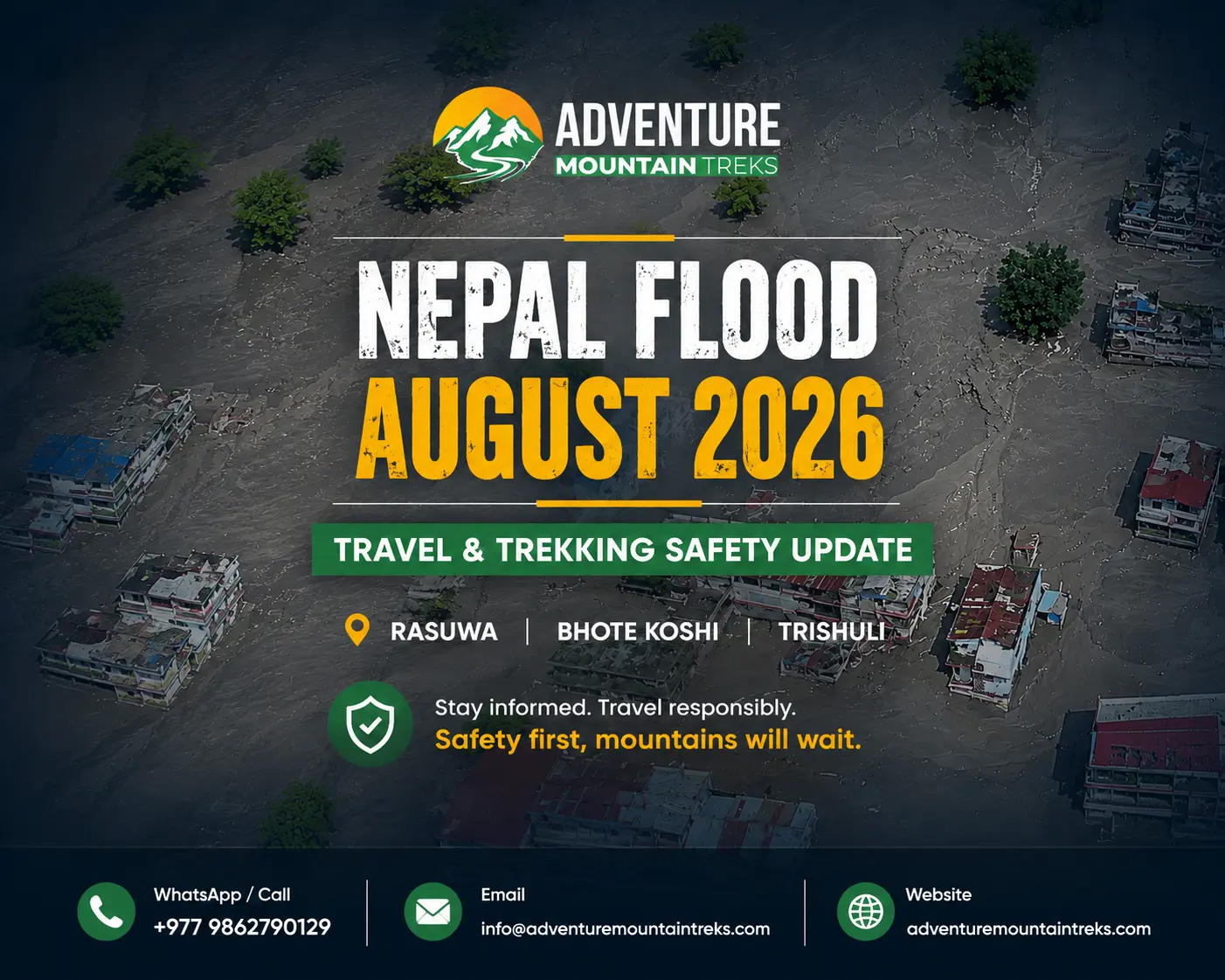
A major flash flood has affected northern Nepal, particularly communities in Rasuwa District and areas connected to the Bhotekoshi and Trishuli river corridors. The situation is serious and rescue operations remain active.
As of the latest local reporting on 26 August, 22 deaths had been confirmed. Nepal Tourism Board data cited by The Kathmandu Post reported that 384 people—including 291 foreign nationals and 32 security personnel—were out of contact. This figure should not be interpreted as a confirmed missing-person or casualty figure: disrupted communications, damaged roads and ongoing rescue operations mean the situation is still being assessed.kathmandupost
For people planning travel or trekking in Nepal, the message is clear: Nepal remains a large and geographically diverse destination, but travellers should not enter flood-affected areas or begin a trek without checking current road, river and trail conditions with reliable local sources.
Is Nepal Safe to travel after 2026 august flash flood? Know more.
What happened in Rasuwa?
The flash flood struck the Bhotekoshi river corridor in Rasuwa on Wednesday, affecting settlements and infrastructure in and around Timure and Syabrubesi. The river enters Nepal from Tibet before joining the Trishuli river system downstream.
Initial reports from the Rasuwa District Administration Office confirmed sudden flooding and warned that rising water could create further risks along the Trishuli corridor. Authorities urged people working, fishing or living near riverbanks to move away from the river and take necessary precautions.kathmandupost
The exact cause of the flood has not yet been confirmed. Officials initially reported that the surge came suddenly and that the origin was unclear. Travellers should therefore avoid sharing or relying on social-media speculation about a glacial lake outburst, avalanche, dam failure or other possible causes until authorities and technical experts release verified findings.reuters+1
The disaster has caused severe damage to riverside settlements, bridges, markets, roads and hydropower infrastructure. Rescue operations have also been complicated by poor weather and communication disruptions.kathmandupost
Current rescue and travel situation
Nepal Army, Nepal Police, Armed Police Force and private helicopter operators have been mobilised for rescue and relief work. By the afternoon of 26 August, 88 people had been rescued by helicopter; 13 of those rescued were admitted to Tribhuvan University Teaching Hospital in Kathmandu, while others were moved to safer locations.kathmandupost+1
The affected zone is concentrated around Rasuwa and downstream river corridors, including areas of Nuwakot and Dhading. Authorities have issued warnings for communities near the Trishuli river, and conditions may change quickly as water levels, weather and access routes develop.kathmandupost
This emergency does not mean that every destination in Nepal is flooded or that all trekking is closed. However, it does mean that travellers should treat monsoon-season road and river travel with extra caution—especially when travelling through northern and central river valleys.
The Department of Hydrology and Meteorology maintains a live River Watch platform that includes monitoring points at Bhotekoshi, Syabrubesi, Rasuwagadhi, Langtang and Trishuli locations. Conditions should be checked close to departure time, rather than relying on information published days or weeks earlier.dhm
What this means for trekkers
Langtang and Rasuwa
The Langtang region is directly connected to Rasuwa District, so travellers with upcoming Langtang Valley, Tamang Heritage Trail or Gosainkunda itineraries should consider the area high-risk until local authorities, transport providers and experienced local operators confirm that access is safe.
Do not assume that a trek can begin simply because a hotel booking or itinerary remains active online. The journey to a trailhead can be affected by washed-out roads, unstable slopes, damaged bridges, restricted transport and interruption to local services.
If you are currently in or near the affected area:
-
Follow instructions from local authorities, security personnel and accommodation providers
-
Stay well away from riverbanks, bridges and flood-damaged roads
-
Do not attempt to cross a river or use an unofficial bypass route
-
Keep your phone charged and share your location and itinerary with your trekking agency or family
-
Leave only when evacuation or transport arrangements have been confirmed
Manaslu Circuit and other regions
The current flood in Rasuwa should not automatically be treated as a closure of the Manaslu Circuit, Everest, Annapurna or every other trekking area in Nepal. Still, monsoon conditions can affect access roads far from the original flood zone.
For the Manaslu Circuit Trek, the usual overland approach commonly follows Kathmandu–Benighat–Arughat–Machha Khola. Depending on the latest local conditions, alternative access points or local road arrangements may sometimes be available. However, an alternative route should never be assumed to be safe or open without confirmation from local authorities, transport operators and an experienced trekking team.
A safe trekking decision depends on the complete journey, not only the condition of the trail. A route may be clear above the trailhead while the approach road remains unsafe because of landslides, flooding or bridge damage.
Essential monsoon travel advice
If you are trekking or travelling in Nepal during the monsoon season, take these practical precautions:
-
Check road, trail and weather conditions immediately before departure
-
Add at least one or two contingency days to your itinerary
-
Avoid travel beside major rivers during heavy rain or flood warnings
-
Follow official road closures and do not use unverified shortcuts
-
Travel with a licensed local guide or a reputable trekking agency
-
Carry waterproof clothing, essential medicines, power banks and offline maps
-
Keep travel insurance details and emergency contacts accessible
-
Be flexible: postponing, rerouting or shortening a trek is often the responsible decision
At Adventure Mountain Treks, we believe a successful Himalayan journey is not defined by following an itinerary at all costs. When weather, roads or trail conditions create an unacceptable risk, changing the route or postponing a departure is the right decision.
Responsible travel after disaster
The immediate priority in Rasuwa is the safety and recovery of affected families, workers, emergency responders and local communities. Visitors should not travel to disaster areas for sightseeing, photography or social-media content.
When conditions become safe, responsible tourism can support recovery by helping sustain the livelihoods of guides, porters, lodge owners, drivers, small businesses and mountain communities. But safety must always come first.
Nepal’s mountains remain extraordinary, and most trekking regions should be assessed individually rather than through rumours or broad assumptions. Before travelling, speak with a reliable local operator who can review your planned route, road access, weather forecast and available alternatives.
Important note: This article reflects information available on 26 August 2026 at approximately 6:20 PM Nepal Time. Casualty, rescue and contact-status figures may change as search, rescue and communication efforts continue. The reported cause of the flood remains under investigation.reuters+1
Adventure Mountain Treks — Travel responsibly. Trek wisely. Put safety first.